
Comparing the 5 leading AI visibility platforms for tracking and improving how your brand shows up in ChatGPT, Gemini, and AI Overviews — and the blind spot every one of them shares for Thai brands.

Suncorp AI Search Optimization
AI Growth Solutions, Bangkok
A marketing lead at a Bangkok-based brand signs up for a trial of an AI visibility platform, plugs in their domain, and watches a dashboard fill up with citation counts, sentiment scores, and competitor comparisons — all pulled from English-language prompts, against English-language competitors, in a tool built for a US or EU market. The dashboard looks impressive. It also has almost nothing to say about whether the brand gets mentioned when a Thai customer asks ChatGPT a Thai-language question. That gap — a real product built for a different market — is what this guide is for.
This piece walks through the five platforms most often recommended for tracking AI visibility — what each one actually does, where they genuinely differ, and the one blind spot all five share when a business’s real market is Thailand or Southeast Asia. It closes with what to actually look for when evaluating a platform (or a managed alternative) for a Thai business specifically, not a generic checklist copied from a US buyer’s guide.
Suncorp AI Growth Solutions tracks this category closely because it competes in it — not as a self-serve dashboard, but as a managed AI Search Optimization practice built around the Thai/SEA market these five platforms don’t localize for. That’s a real bias worth naming upfront; the comparison below still tries to describe each platform fairly on its own terms.

An AI visibility platform runs a set of representative prompts against ChatGPT, Gemini, Perplexity, and similar assistants on a schedule, then tracks whether — and how — a given brand gets mentioned in the responses: cited by name, recommended, compared against competitors, or absent entirely. It’s the AI-search equivalent of a rank tracker, applied to a search surface that has no fixed rankings, no consistent SERP, and answers that change from one run to the next. The category exists because that instability makes manual checking (the kind covered in our GEO vs SEO guide) too slow to catch changes as they happen.
Most platforms in this space share a common core: prompt tracking, citation/mention detection, competitor benchmarking, and some form of sentiment or share-of-voice scoring. Where they diverge is coverage (which AI assistants they actually monitor), prompt customization (can you write your own prompts in your own market’s language), and how deep the underlying data goes versus how much is a polished dashboard over a thin data layer.
Profound is generally considered the category leader on enterprise features — deep citation analysis, competitor share-of-voice tracking, and integrations built for larger marketing teams already running structured SEO/GEO programs. It’s built primarily for English-language, US-market brands, and pricing sits at an enterprise tier that puts it out of reach for most SME budgets.
AthenaHQ positions itself around actionable recommendations rather than just monitoring — flagging specific content or structural changes a brand could make to improve its citation rate, not just reporting the current score. Strong for teams that want a platform to also tell them what to do next, though its recommendation engine, like the others here, is tuned on English-language content patterns.
Peec AI leans into a clean, accessible interface and faster setup than the enterprise players, making it a more realistic starting point for a smaller marketing team. Coverage of non-English assistants and regional query behavior is limited, the same pattern that shows up across this entire category.
Rankscale AI focuses specifically on tracking how a brand’s own content performs across AI answer engines, with an emphasis on connecting visibility data back to specific pages and content decisions — useful for a content team, less useful as a standalone competitive-intelligence tool.
Scrunch AI covers a similar core feature set with a focus on structured data and how a site’s technical setup affects whether AI crawlers and retrieval systems can parse it correctly — a genuinely useful angle, since a chunk of AI-citation failures trace back to technical accessibility, not content quality.
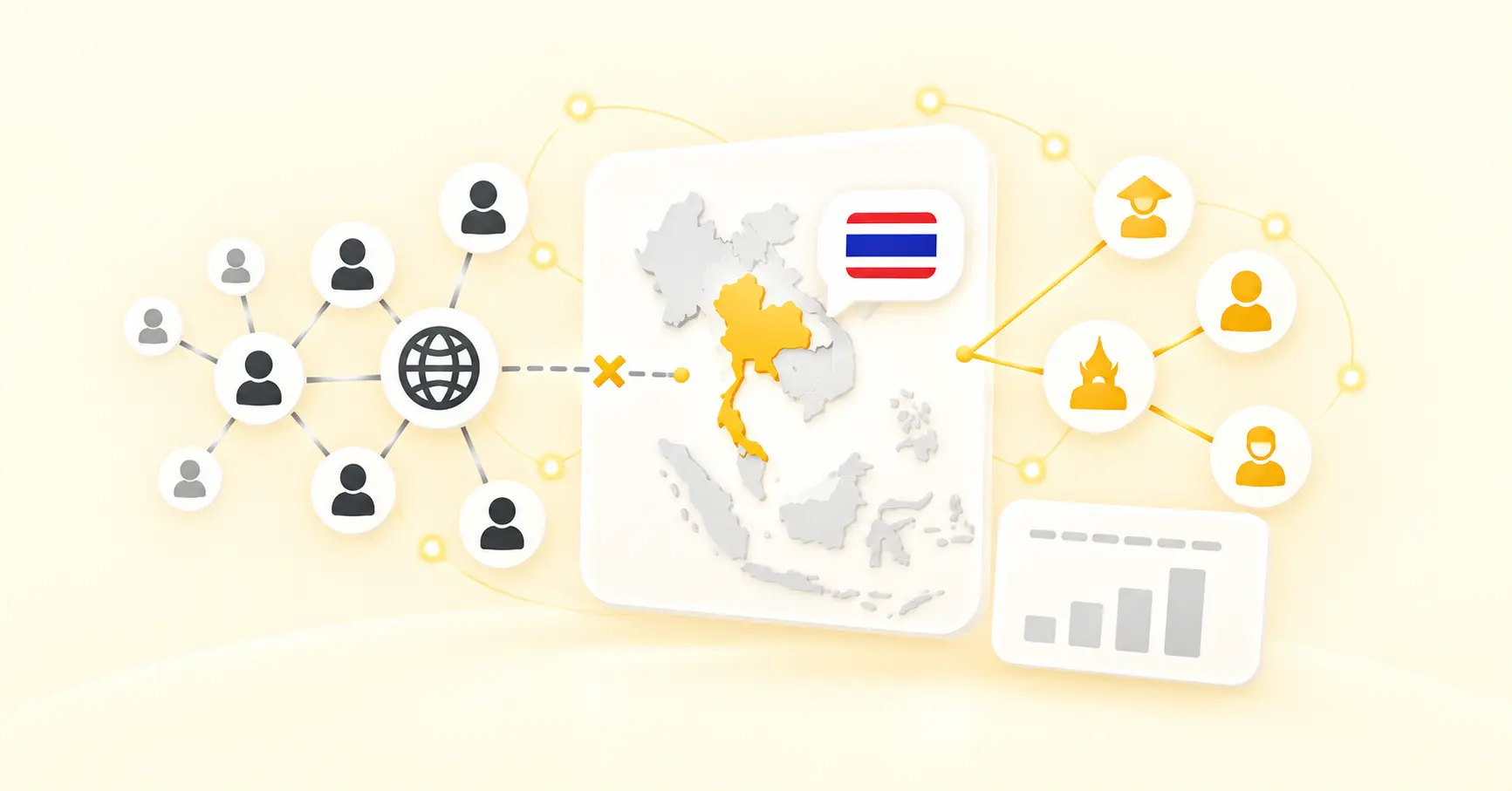
Read the five descriptions again and a pattern shows up: every one of them is built, trained, and benchmarked on English-language, Western-market AI search behavior. None currently offers Thai-language prompt libraries, Thai competitor benchmarking, or scoring calibrated to how Thai-language queries actually get answered — the exact mechanic covered in our guide to whether ChatGPT even answers in Thai, where English-leaning answers to Thai questions are shown to be common, not rare.
That’s not a knock on any of these five products — it’s a market-coverage gap, the same kind that existed in traditional SEO tooling before Thai-market-specific keyword and rank-tracking tools matured. A Thai brand running a US-built platform’s default prompt set is measuring visibility in a market that isn’t necessarily its own, and getting a dashboard that looks precise while actually testing the wrong language, the wrong competitor set, and the wrong query patterns.
Can you write and run prompts in Thai, not just English?
If the platform’s prompt engine only accepts English input, or handles Thai as an afterthought, its visibility score isn’t measuring what your actual Thai-speaking customers ask.
Does it track the AI assistants your market actually uses?
ChatGPT, Gemini, and Google AI Overviews dominate visibility conversations globally, but usage patterns and which assistant a Thai consumer defaults to can differ from a US benchmark — check what the platform actually monitors, not what it claims to support in marketing copy.
Does competitor benchmarking include your real, local competitors?
A platform’s default competitor suggestions are usually pulled from the same market its prompt library is built for — for a Thai brand, that often means the suggested competitor set is irrelevant and has to be manually rebuilt.
Is the pricing tier realistic for an SME budget, not just an enterprise one?
Several platforms in this category price for large marketing teams with dedicated GEO budgets — a fair trade for the depth they offer, but worth weighing against what a smaller Thai business actually needs to act on.
Does the data translate into a specific action, or just a score?
A dashboard number with no clear next step doesn’t move visibility on its own — the platforms above vary widely in how directly they connect a metric to a concrete content or technical fix.
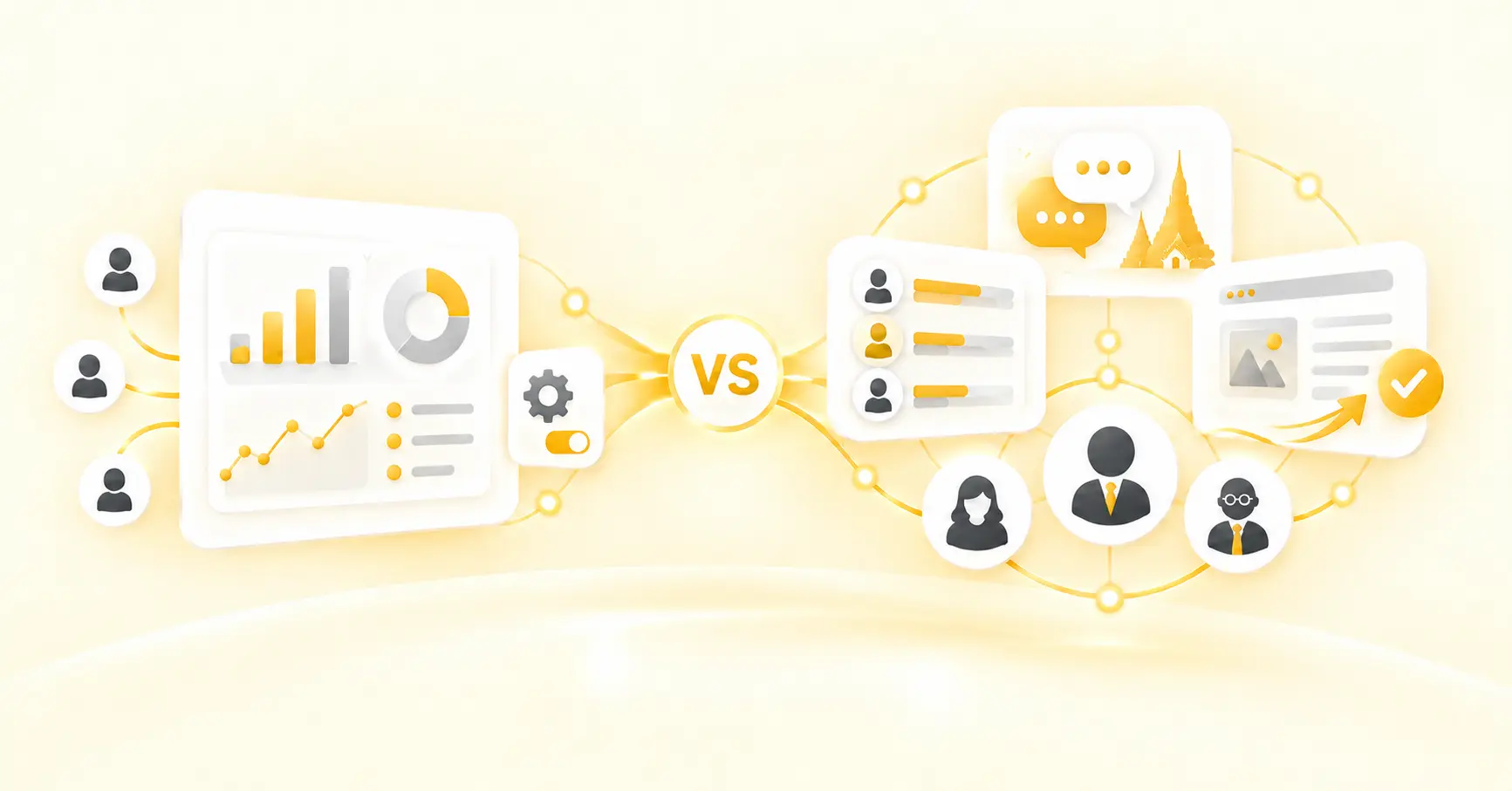
A self-serve platform is the right call for a team that already has GEO expertise in-house and just needs the monitoring layer — the tooling covered above genuinely saves time over manual prompt-checking once a team knows what to do with the data. What none of the five platforms do is build the Thai-language prompt library, run the Thai-market competitor analysis, or implement the content and technical fixes on their dashboards surface — that’s a services gap a platform subscription alone doesn’t close.
That’s the specific gap Suncorp’s AI Search Optimization practice is built to fill for the Thai/SEA market — not a competing dashboard product, but the localized prompt design, benchmarking, and implementation work that turns any platform’s output (or a manual testing process, if a business isn’t ready to pay for a platform yet) into an actual improvement in citation rate. A business evaluating this category should decide honestly which gap it’s actually trying to close before comparing tools.
1. Request a trial and immediately load your own Thai-language prompts the real questions your customers ask — rather than relying on the platform’s default English prompt set.
2. Check what competitor set it suggests by default, and confirm it includes your actual local competitors, not a generic industry list built for a different market.
3. Ask directly whether Thai-language monitoring is a currently supported feature or a roadmap item — several platforms in this space are expanding language coverage quickly, so a “not yet” today may change within a quarter.
4. Run the same set of prompts manually (the process covered in the ChatGPT-in-Thai guide linked above) alongside the platform’s automated results for a few weeks, and compare — a platform’s automated score should roughly track what manual testing shows, not diverge wildly from it.
5. Weigh the subscription cost against what a managed alternative would cost for the same market coverage, especially if the platform’s own recommendations still require expert implementation you’d need to hire for separately.
All five platforms compared here are legitimate, capable products, and any of them will out-perform guessing. None of them, as of this writing, is built specifically for the Thai or Southeast Asian market — which means the honest evaluation question for a Thai business isn’t just “which platform has the best dashboard,” but “which approach — a self-serve tool plus in-house Thai-language expertise, or a managed practice that already has that expertise — actually closes the localization gap for my brand.” Answering that honestly, before committing budget, is what separates a visibility score that reflects reality from one that just looks precise.
A tool that runs a set of representative prompts against AI assistants like ChatGPT, Gemini, and Perplexity on a schedule, then tracks whether and how a given brand gets mentioned, cited, or recommended in the responses — similar in purpose to a traditional SEO rank tracker, applied to AI-generated answers instead of a search-results page.
None of the five leading platforms — Profound, AthenaHQ, Peec AI, Rankscale AI, or Scrunch AI — currently offers native Thai-language prompt tracking or Thai/SEA competitor benchmarking. The best fit depends on whether a business needs enterprise-depth monitoring (Profound), actionable recommendations (AthenaHQ), fast setup (Peec AI), content-level tracking (Rankscale AI), or technical/structured-data focus (Scrunch AI) — paired with a manual or managed process to cover the Thai-market gap each one shares.
Pricing varies widely by tier and isn’t published consistently across the category, but the enterprise-focused platforms in this space generally price for larger marketing teams with dedicated GEO budgets, while newer entrants aim for a more accessible SME price point. Request current pricing directly, since it changes frequently in this fast-moving category.
Yes — running the same representative prompts by hand across ChatGPT, Gemini, and Perplexity on a regular schedule, and logging response language, citations, and sentiment, covers the same core signal a platform automates. It doesn’t scale as well and takes more time, but it’s a legitimate starting point before committing to a subscription, and it’s the same process described in how to test whether ChatGPT answers in Thai.
Most are primarily monitoring tools; AthenaHQ leans further into actionable recommendations than the others, but even there, implementing the fix — content changes, schema markup, structural improvements — is separate work the platform itself doesn’t perform. For the technical implementation side specifically, see how to rank in ChatGPT and Google AI Overviews.
It depends on whether the gap a business needs to close is monitoring (a platform’s core job) or localized strategy and implementation (a managed service’s core job) — many businesses eventually need both, using a platform for ongoing tracking once the strategy and content work is in place.
Run a handful of your own real, Thai-language customer questions through ChatGPT, Gemini, and Perplexity manually first, to see where you currently stand before comparing platforms. If you’d rather have that benchmarking done for you, with a Thai/SEA-specific lens these five platforms don’t offer, book a free AI visibility consultation and we’ll walk through where your brand actually stands.

Suncorp AI Growth Solutions is a Bangkok-based agency building AI Search Optimization (GEO/AEO), AI Advertising, and AI Content services specifically for the Thai and Southeast Asian market — the localization gap this guide covers is the one we built our practice around.
Get a free, scored AI Visibility report in about two minutes
— no commitment required.

