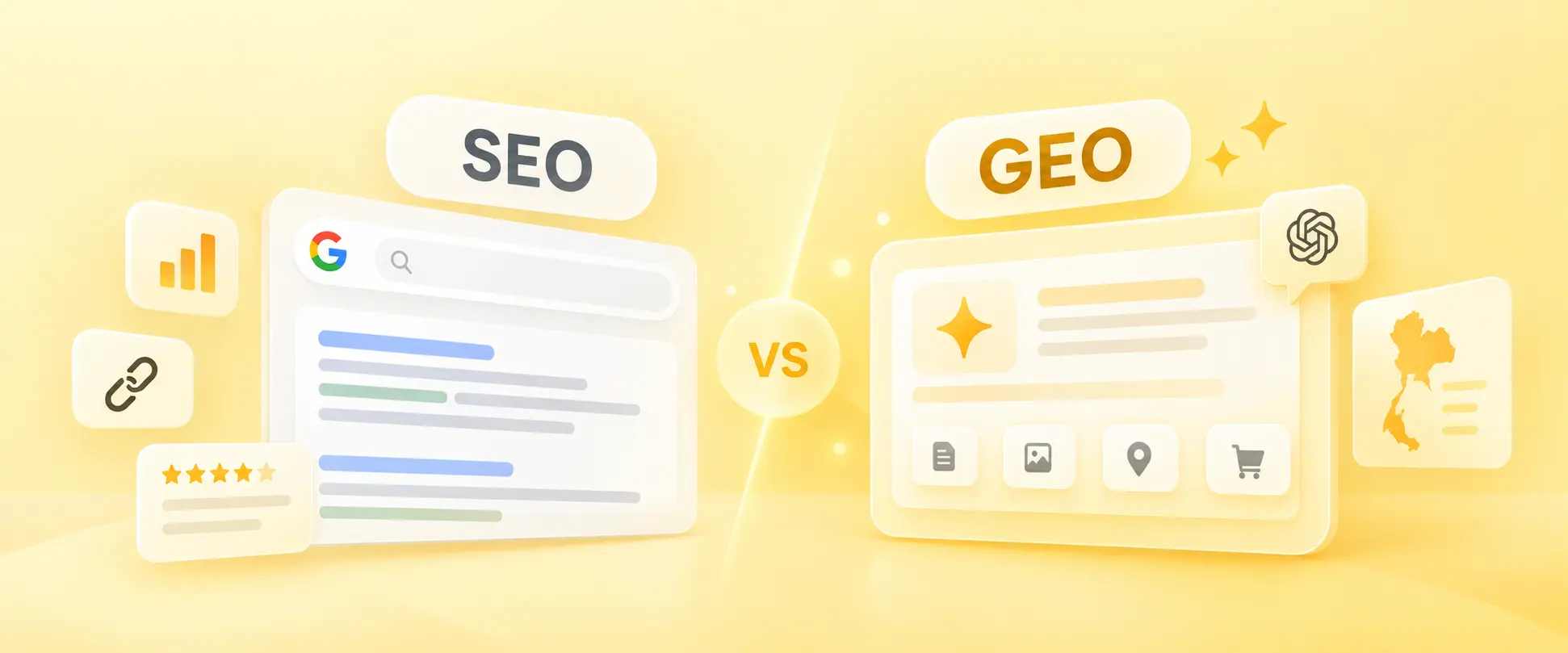
A plain-terms breakdown of what separates generative engine optimization from traditional SEO — and the localization gap almost no GEO advice mentions, because it’s written for Bangkok, not Boston.

Suncorp AI Search Optimization
AI Growth Solutions, Bangkok
A customer in Bangkok used to type “best clinic near me” into Google and scroll a page of blue links. Now they open ChatGPT, Perplexity, or Google’s AI Overview and ask the same question in plain language — and get one answer, already written, already decided, with maybe three brands mentioned by name. If your business isn’t one of those three, the customer never sees you at all. That’s the shift GEO vs SEO is really about: not a rebrand of old-fashioned optimization, but a second, parallel discipline for a search experience where the “result” is a paragraph an AI model wrote, not a list of links a human has to click through.
This guide breaks down exactly what separates generative engine optimization (GEO) from traditional search engine optimization (SEO), how AI models like ChatGPT, Gemini, Claude, and Perplexity actually decide which businesses to mention, and — because this is a question almost no GEO content answers — what changes when your customers are searching in Thai, from Bangkok, Chiang Mai, or Phuket, on platforms mostly built and tested against English-language, Western use cases. By the end, you’ll know where your business sits in the GEO vs SEO picture today, and what to fix first.
Suncorp AI Growth Solutions built its AI Search Optimization practice specifically around this gap — helping Thai and Southeast Asian businesses show up in AI-generated answers, not just search engine result pages. We work with this shift daily, which is also why this guide doesn’t pretend GEO replaces SEO. It doesn’t. It sits next to it, and getting the relationship right is the actual skill.
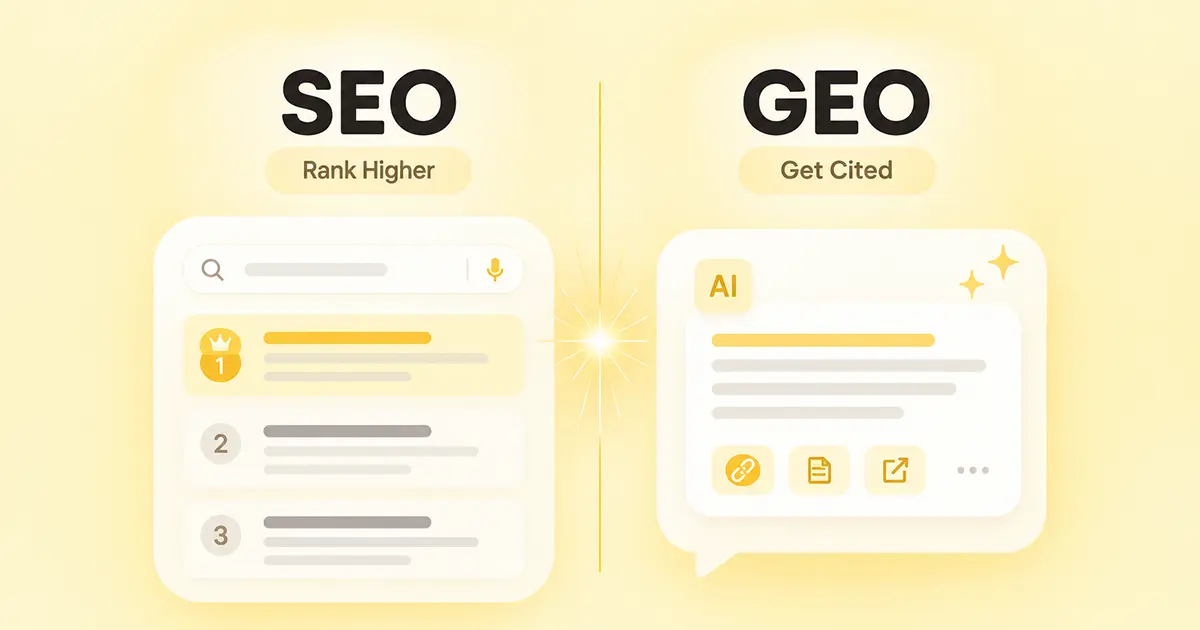
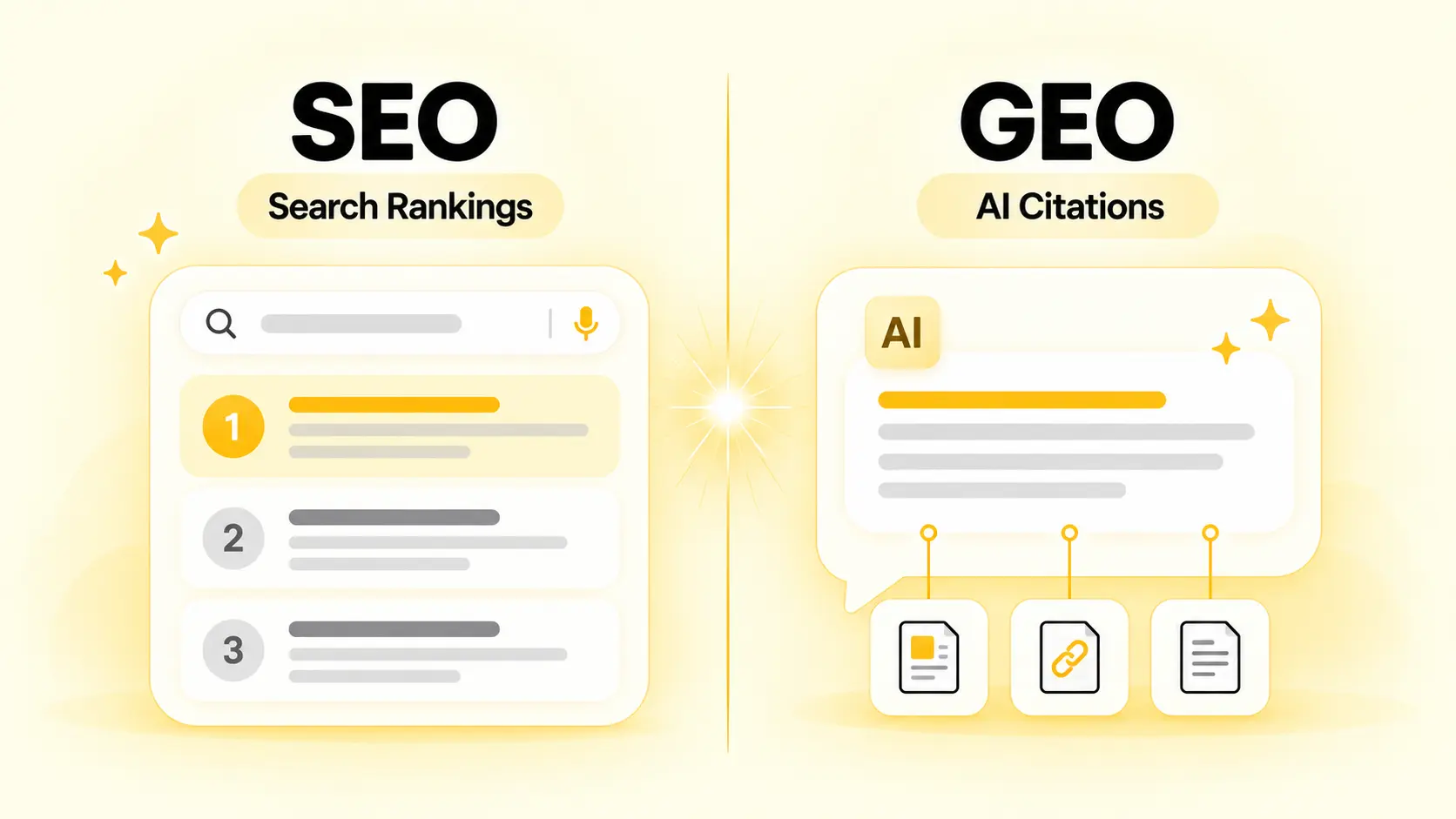
GEO vs SEO comes down to a difference in what you’re optimizing for: SEO earns your business a ranked position in a list of links a person then has to click; GEO earns your business a mention — ideally with a citation or link — inside an answer an AI system has already written and handed to the user directly. SEO is about being findable. GEO is about being quotable.
The two disciplines share real DNA. Both still depend on your website having accurate, well-structured, genuinely useful content; both still reward sites that other credible sources reference and trust; both still get hurt by thin pages, broken technical fundamentals, and content nobody actually needed. GEO didn’t invent good content practice — it changed who’s “reading” it first. A traditional search crawler indexes your page so a human can later decide whether to click it. A large language model reads your page (often once, during training or a retrieval pass) and decides, on the user’s behalf, whether your business deserves to be part of the answer at all. There’s no click to earn back if it decides no.
That distinction is why a page that’s ranked #1 in Google for years can be completely absent from ChatGPT’s answer to the same question — and why a smaller, newer competitor with clearer, more directly-answerable content can out-perform an SEO-strong site in AI search. Ranking position and AI citation are correlated, not identical, which is the single most common misunderstanding businesses bring into the GEO vs SEO conversation.
| SEO (Traditional Search) | GEO (AI Search) | |
|---|---|---|
| Goal | Rank in a list of links | Get mentioned/cited inside a generated answer |
| Success signal | Position #1–10, click-through rate | Citation frequency, share of AI-generated answers |
| Content format that wins | Long-form, keyword-optimized pages | Direct, extractable answers; clear structure; definitive statements |
| Primary "reader" | A search crawler, then a human | A language model, often without a human ever visiting your page |
| Authority signal | Backlinks, domain authority | Being cited or referenced by sources the model already trusts |
| Update cycle | Indexed within days | Depends on the model's training/retrieval cycle — can lag weeks or months |
| Measurement tools | Google Search Console, rank trackers | AI visibility platforms — still maturing, less standardized |
critical differences matter more than the table suggests. , FirstAI search rewards directness over depth. A 3,000-word article that eventually answers the question in paragraph twelve does fine in traditional SEO, where a human is willing to scan and scroll. A language model summarizing sources for a one-paragraph answer favors content that states the answer plainly, early, and specifically enough to quote — which is a genuine rewrite of how “good content” gets structured, not just a new label on the same advice.
Second, GEO has a much thinner measurement layer than SEO does. Search Console has told SEOs their exact impressions and rankings for two decades. No equivalent, universally trusted dashboard exists yet for “how often did ChatGPT mention my brand this month” — the platforms attempting to answer that (covered below) are new, imperfect, and priced for enterprise budgets. Businesses adopting GEO right now are making decisions with meaningfully less visibility than they’re used to from SEO, which is worth knowing going in rather than discovering after a few months of guessing.
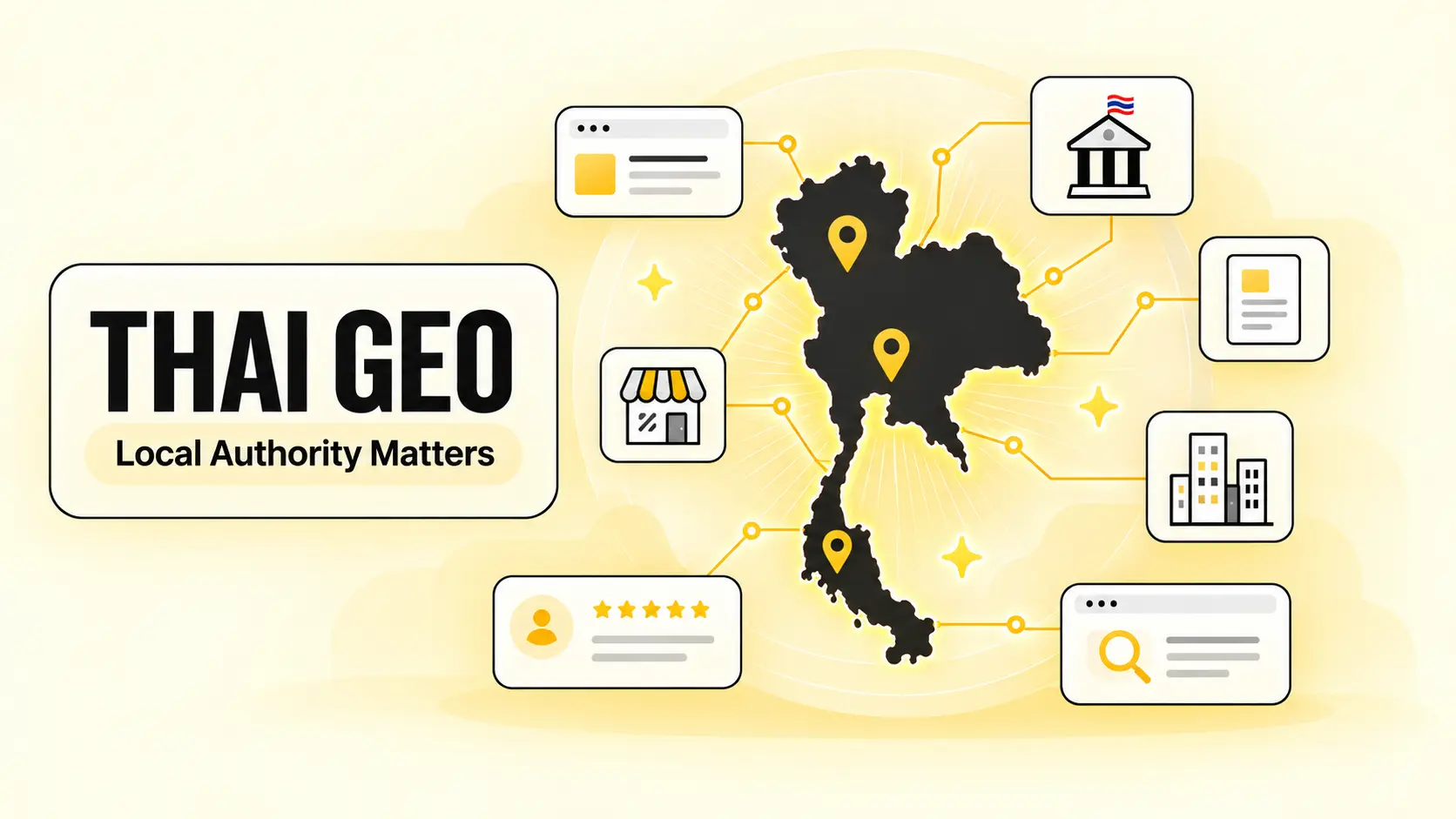
Almost everything written about GEO vs SEO so far assumes an English-language, US or European market — which creates a real, specific problem for a business trying to apply that advice in Thailand. Large language models are trained overwhelmingly on English-language content; Thai-language sources make up a small fraction of most models’ training data. That has two direct consequences.
AI answers to Thai-language queries lean more heavily on whatever Thai-language content the model actually has, which means the field is genuinely less crowded — a Thai business with clear, well-structured Thai content has a real shot at being one of the only credible sources a model can cite, in a way that’s much harder to achieve in an oversaturated English-language category. That’s an opportunity SEO-only strategies inherited from bigger, more competitive markets aren’t built to notice.
AI answers to English-language queries about Thai businesses often default to global brands and Western sources, even when a Thai company is the more relevant, better-informed answer — because the model has simply seen more content from and about the global players. A Bangkok-based real estate agency competing for “best property investment Thailand” against globally-known real estate platforms is fighting a training-data imbalance that has nothing to do with the quality of their service.
That localization layer — bilingual Thai/English content strategy, Thai-market schema and citation work, not a translated checklist — is the specific practice Suncorp built its AI Search Optimization service around. It’s the reason the recommendations in this guide are written for a Bangkok business’s actual constraints, not adapted after the fact from a US playbook.
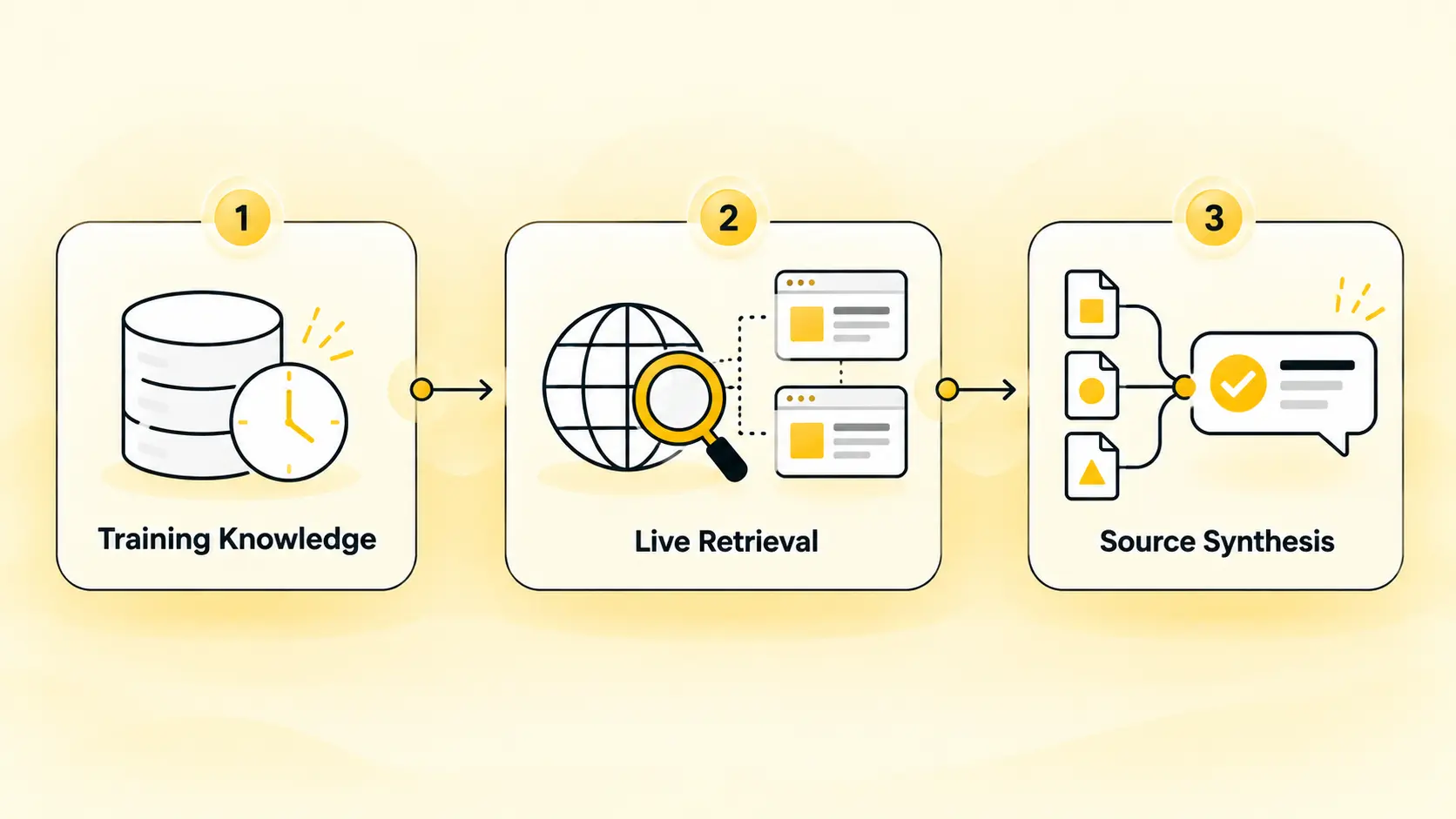
Every major AI platform — ChatGPT, Google’s AI Overviews and Gemini, Perplexity, Claude — builds its answers from some combination of two sources: what the model learned during training, and what it retrieves live from the web when it generates a response (a process generally called retrieval-augmented generation). Understanding both matters, because they reward different things. For businesses, the key question is how to make content more visible and more likely to be cited by AI platforms. Learn more in our guide to How to Rank in ChatGPT?.
Training-time knowledge favors content that’s been around long enough, and been referenced by enough other sources, to become part of the pattern the model learned. This is closer to traditional authority-building — the SEO instinct that backlinks and reputation compound over time still applies here, just measured differently.
Live retrieval favors content that’s technically easy for the model to fetch and parse right now: clean HTML structure, clear headings that map to likely questions, content that directly answers a query without requiring the reader to infer the answer from context, and — increasingly — structured data (schema markup) that tells the model explicitly what a page is about. A page can be authoritative and still lose a retrieval-based citation to a less-established competitor simply because its content is easier for the model to extract a clean quote from.
There’s a third factor worth naming, because it surprises most businesses new to GEO: models often synthesize an answer across several sources rather than quoting one, which means the goal isn’t necessarily to be the single source cited — it’s to be one of the handful of sources whose framing, numbers, or wording the model’s synthesized answer ends up echoing. A business can meaningfully shape an AI answer about its category without ever appearing as a named citation, simply by being consistently referenced across enough of the sources the model draws from.
That’s also, concretely, what a GEO technical audit checks for: whether a page’s schema markup, heading structure, and answer placement actually give a model something clean to retrieve — the same review Suncorp runs as the first step of any AI Search Optimization engagement, before any content gets rewritten.
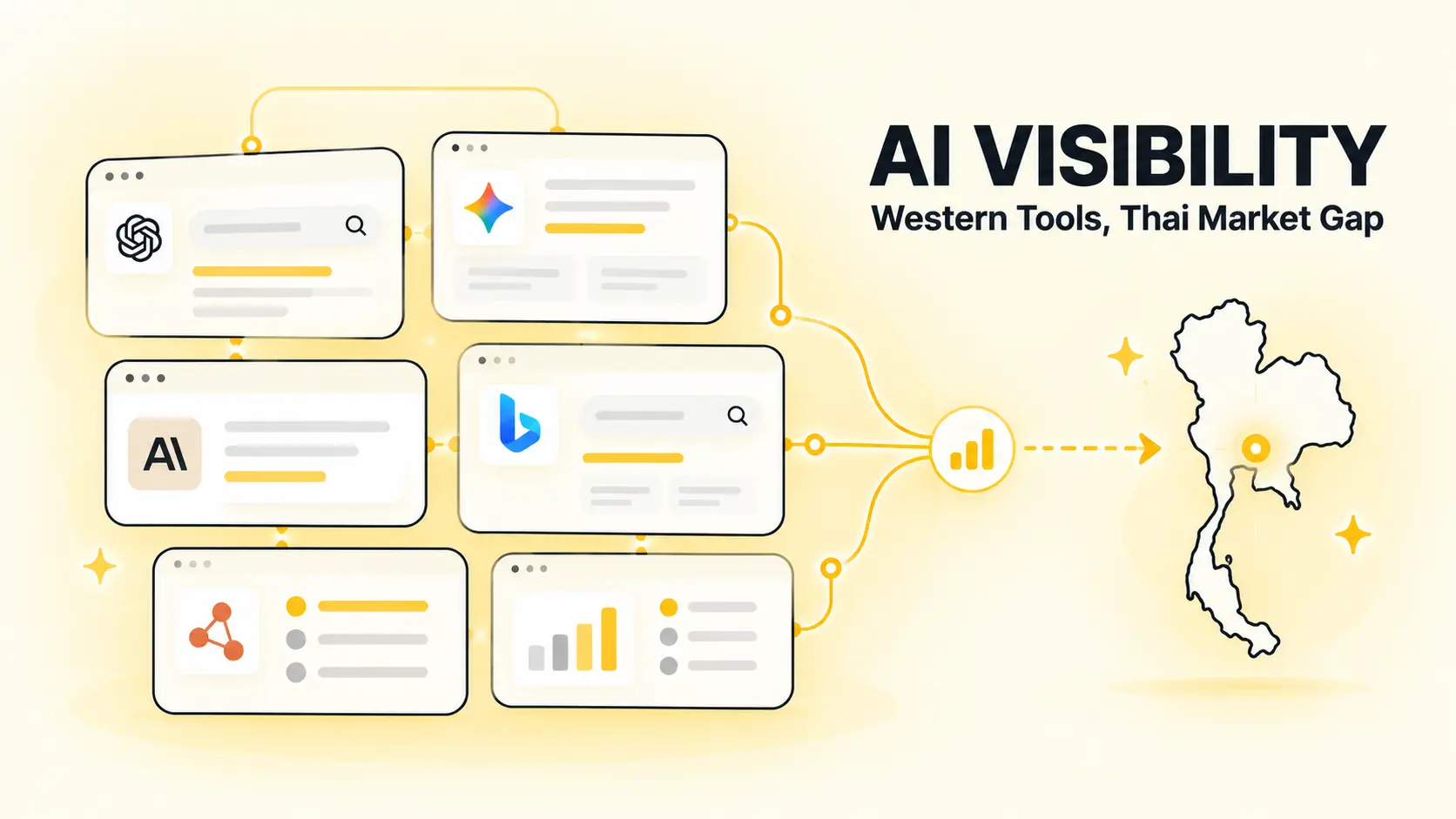
A small category of tools has emerged specifically to track and improve AI search visibility, roughly mirroring what rank trackers did for SEO twenty years ago: Profound, AthenaHQ, Peec AI, Rankscale AI, and Scrunch AI each monitor how often a brand gets mentioned across ChatGPT, Perplexity, Gemini, and AI Overviews, and offer varying degrees of optimization guidance on top of that monitoring.
They’re genuinely useful, and worth knowing about even if you never subscribe to one directly — the category validates that AI visibility is measurable, not just a theory. But every one of them was built, tested, and priced around US and European markets, in English. None currently offers meaningful Thai-language tracking, none is built around how Thai consumers actually phrase AI queries (which mixes Thai and English more than Western usage patterns), and their enterprise pricing puts them out of reach for most small and mid-sized Thai businesses regardless.
That gap — genuine AI visibility tooling that understands the Thai and Southeast Asian market specifically, rather than a Western platform with English-only coverage bolted onto a Thai client — is the reason Suncorp built its own AI Search Optimization practice around GEO and AEO for this market specifically, rather than reselling a Western dashboard. It’s also worth being honest about the limitation: this is a genuinely new category, and no platform — including the ones building for this market — has years of proven track record yet the way Google Search Console does for SEO. Anyone selling certainty in the GEO vs SEO space right now is overselling.
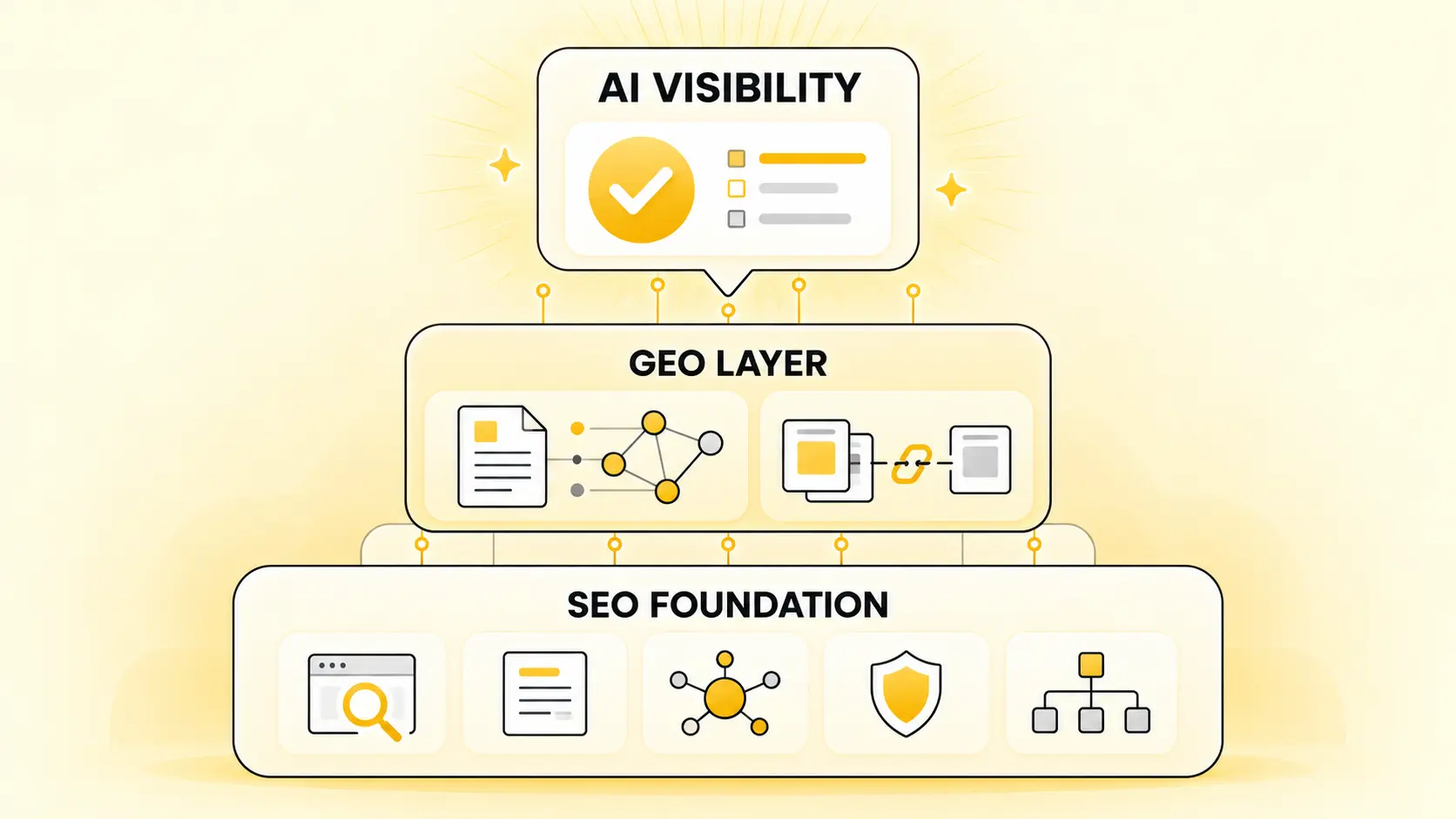
The businesses handling this transition best aren’t the ones dropping SEO for GEO — they’re the ones layering GEO on top of an SEO foundation that already works, because so much of what makes a page GEO-friendly is already SEO best practice done properly.
Start with content structure, not new content. Audit your highest-value existing pages for whether they answer their core question directly and early, rather than building up to it. A page that already ranks well in Google but buries its answer in paragraph six is an easy GEO win before you write anything new.
Add or clean up schema markup. Structured data (Organization, Service, FAQ, Article schema) gives AI models an explicit, machine-readable description of what your page is about, reducing how much they have to infer. This is one of the few GEO levers with a clear technical checklist rather than a judgment call — a full technical walkthrough deserves its own guide, coming next in this series.
Build genuine topical depth, not keyword variations. Because AI models synthesize across multiple sources rather than ranking one page, a site that thoroughly covers a topic across several connected, well-linked pages gives a model more material to draw from and cite than one page trying to cover everything shallowly. This is the same logic behind a proper content cluster — a pillar page like this one, supported by focused, connected pieces underneath it. It’s also where GEO overlaps with a business’s broader content operation, not just its SEO team — production speed and consistency across a whole cluster is exactly what Suncorp’s AI Content Studio is built for, separate from the search-optimization work covered in this guide.
Get cited elsewhere, deliberately. Because training-time authority still matters, being referenced, quoted, or linked by other credible sites — industry publications, directories, partners — feeds both your SEO and GEO visibility at once. This is the one area where the two disciplines’ advice is genuinely identical.
Track what you can, and accept what you can’t yet. Until AI visibility measurement matures further for this market, expect to combine whatever platform-level tracking is available with manual spot-checks — actually asking ChatGPT, Perplexity, and Gemini your own customers’ likely questions and seeing who gets mentioned. It’s unglamorous, but it’s real data, and it’s free.
Businesses ready to act on the technical side of this — schema markup, content restructuring, and platform-specific tactics for getting cited by ChatGPT and Google AI Overviews specifically — will find a dedicated practical walkthrough in the next guide in this series, built specifically for the tactics summarized above. A separate guide focused on AEO for hotels, one of Thailand’s largest and most AI-search-exposed industries, is also coming as part of the same series.
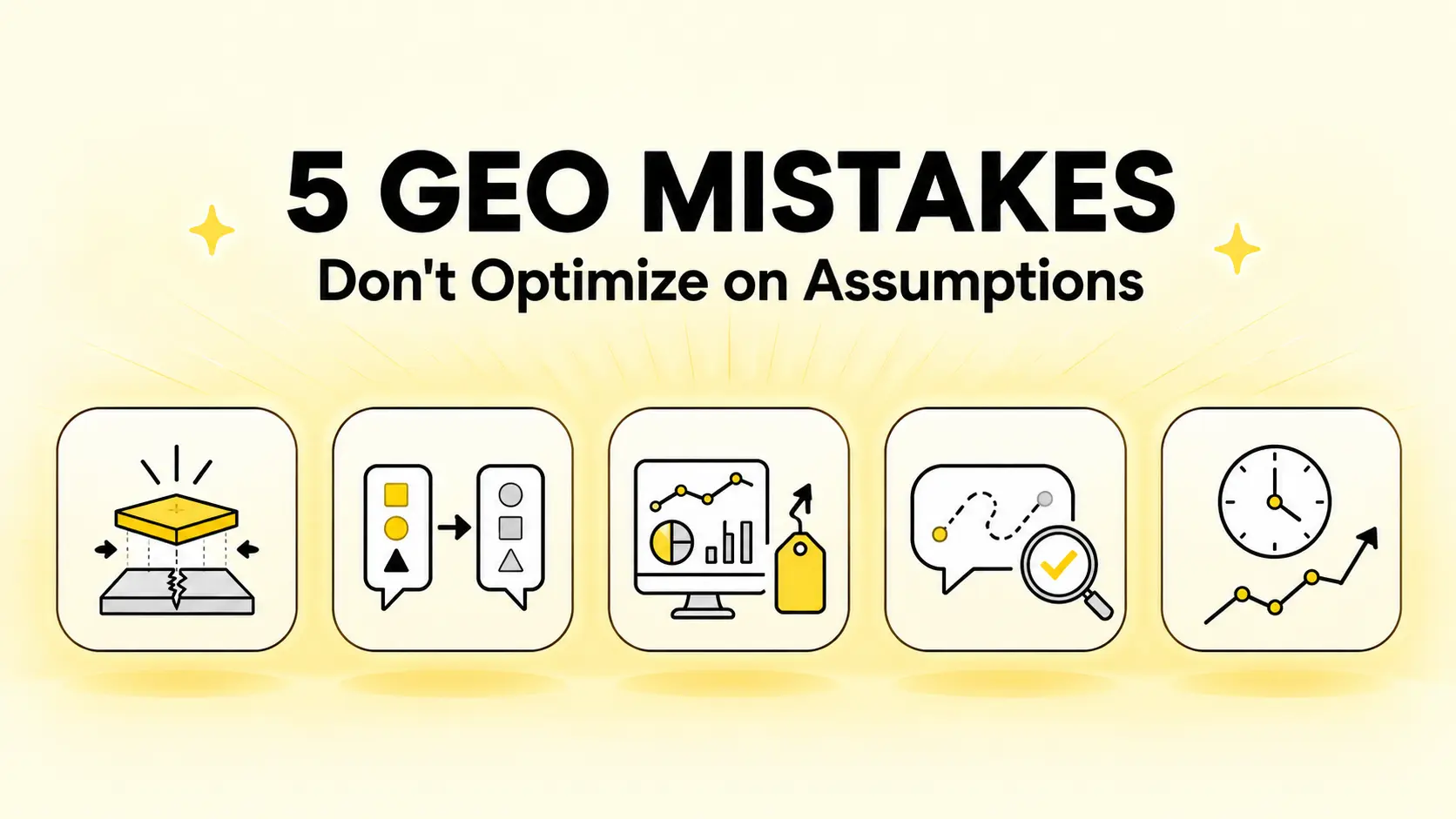
Traditional search still drives meaningful traffic in Thailand today, and will for years — abandoning SEO investment to chase GEO exclusively leaves both channels weaker than either one done properly.
As covered above, Thai-language AI visibility and English-language AI visibility for a Thai business are two separate problems with two separate solutions — a single translated strategy rarely solves both.
Structure, schema, and topical depth are free or low-cost fixes that move the needle before a five-figure annual tool subscription does. Get the fundamentals right first.
It costs nothing to open ChatGPT, Perplexity, and Gemini and actually ask the questions your customers would ask. Most businesses evaluating GEO vs SEO skip this step and end up optimizing for an assumption instead of an observed answer.
Training-time authority builds slowly, the same way backlink authority always has — a realistic GEO strategy is measured in months, not weeks, even when the technical execution is right from day one.
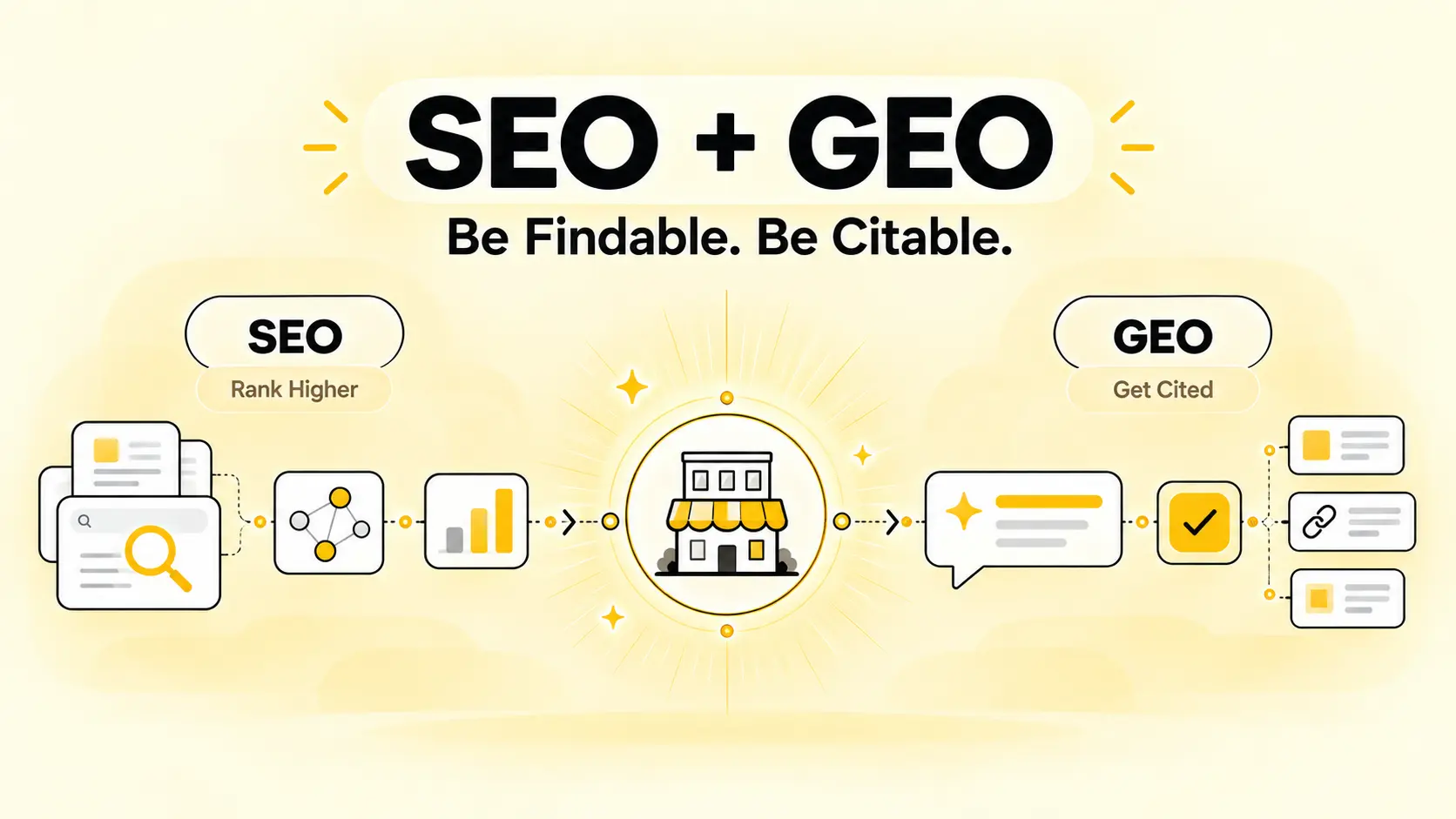
GEO vs SEO isn’t really a competition — it’s a business now needing to be found two different ways by two different kinds of “reader,” a search crawler and a language model, each rewarding a slightly different version of the same underlying discipline: clear, structured, genuinely useful, well-referenced content. Thai businesses have a real, specific opening here that most GEO advice never mentions — a less crowded Thai-language AI landscape, and a first-mover advantage available to whoever builds real Thai-market AI visibility before their competitors realize it’s a separate skill from SEO. The businesses that treat this as one connected strategy, not a replacement project, are the ones customers will actually find — however they’re searching.
To put this strategy into practice, businesses also need to understand how AI visibility can be measured and which tools can help track their presence across AI platforms. Explore our AI visibility platform comparison guide.
No. SEO still drives real traffic through traditional search results, and most of what makes content GEO-friendly — clear structure, genuine expertise, real authority — is SEO best practice applied to a new audience of readers (AI models instead of only humans). Treat them as complementary, not competing, budgets.
The terms overlap heavily and are often used interchangeably in practice. AEO tends to emphasize optimizing specifically for direct-answer formats (featured snippets, voice search, AI Overviews’ answer boxes), while GEO is the broader term for visibility across generative AI platforms generally. For most businesses, the practical work — direct answers, structure, schema, authority — is the same regardless of which label you use.
Not yet, not with the same precision. Dedicated AI visibility platforms exist but are new, mostly enterprise-priced, and don’t yet cover Thai-language search meaningfully. Manual spot-checks — asking ChatGPT, Perplexity, and Gemini your customers’ likely questions yourself — remain a genuinely useful supplement until measurement tools mature.
Yes, in two specific ways: less competition in Thai-language AI answers (an opportunity), and a tendency for English-language AI answers about Thai topics to favor globally-known brands over locally relevant ones (a challenge). A strategy copied from Western GEO advice addresses neither.
Similar to SEO — expect months, not weeks, since a meaningful share of AI citation depends on training-time authority that builds gradually. Structural fixes (schema, direct answers) can influence live-retrieval citations faster, but training-time visibility lags behind execution the same way backlink authority always has.
Open ChatGPT, Perplexity, and Gemini yourself and ask the three or four questions your actual customers are most likely to ask about your category, in both Thai and English. What comes back — who gets mentioned, who doesn’t, and how the Thai-language answer differs from the English one — tells you more about where to start than any framework, including this one.
It depends on existing SEO maturity and internal capacity — a business with strong technical SEO already in place may only need targeted schema and content-structure work, which a capable in-house team can often handle. A business starting closer to zero, or without dedicated technical resources, typically moves faster with a partner who already understands both the technical GEO mechanics and the Thai-market localization gap covered throughout this guide. If you want a straightforward answer for your specific situation, book a free AI visibility consultation and we’ll tell you honestly which category you’re in.

Suncorp AI Growth Solutions is a Bangkok-based agency building AI Search Optimization (GEO/AEO), AI Advertising, and AI Content services specifically for the Thai and Southeast Asian market — the localization gap this guide covers is the one we built our practice around.
Get a free, scored AI Visibility report in about two minutes
— no commitment required.
October 16, 2026
September 25, 2026