
AI video ads for restaurants help turn real food, signature dishes, and special offers into engaging video campaigns that attract customers, increase visibility, and drive more orders.

Suncorp AI Search Optimization
AI Growth Solutions, Bangkok
AI video ads for restaurants should make a real dish, offer, or occasion easier to understand. They should not create a more impressive meal than the kitchen serves, invent a packed dining room, or put a recommendation into the mouth of a customer who never existed. The strongest starting point is verified material from the business, followed by a clear creative plan and a review process.
This guide focuses on short advertising campaigns: choosing a campaign objective, building scripts from real assets, preparing variations, checking disclosure, and measuring meaningful actions. It also explains which parts of the process can transfer to car rental advertising, without treating a vehicle booking as the same decision as dinner.
Suncorp’s AI growth solutions include video and content support. The examples below are hypothetical production plans, not client case studies or promises about reservations, sales, or advertising performance.
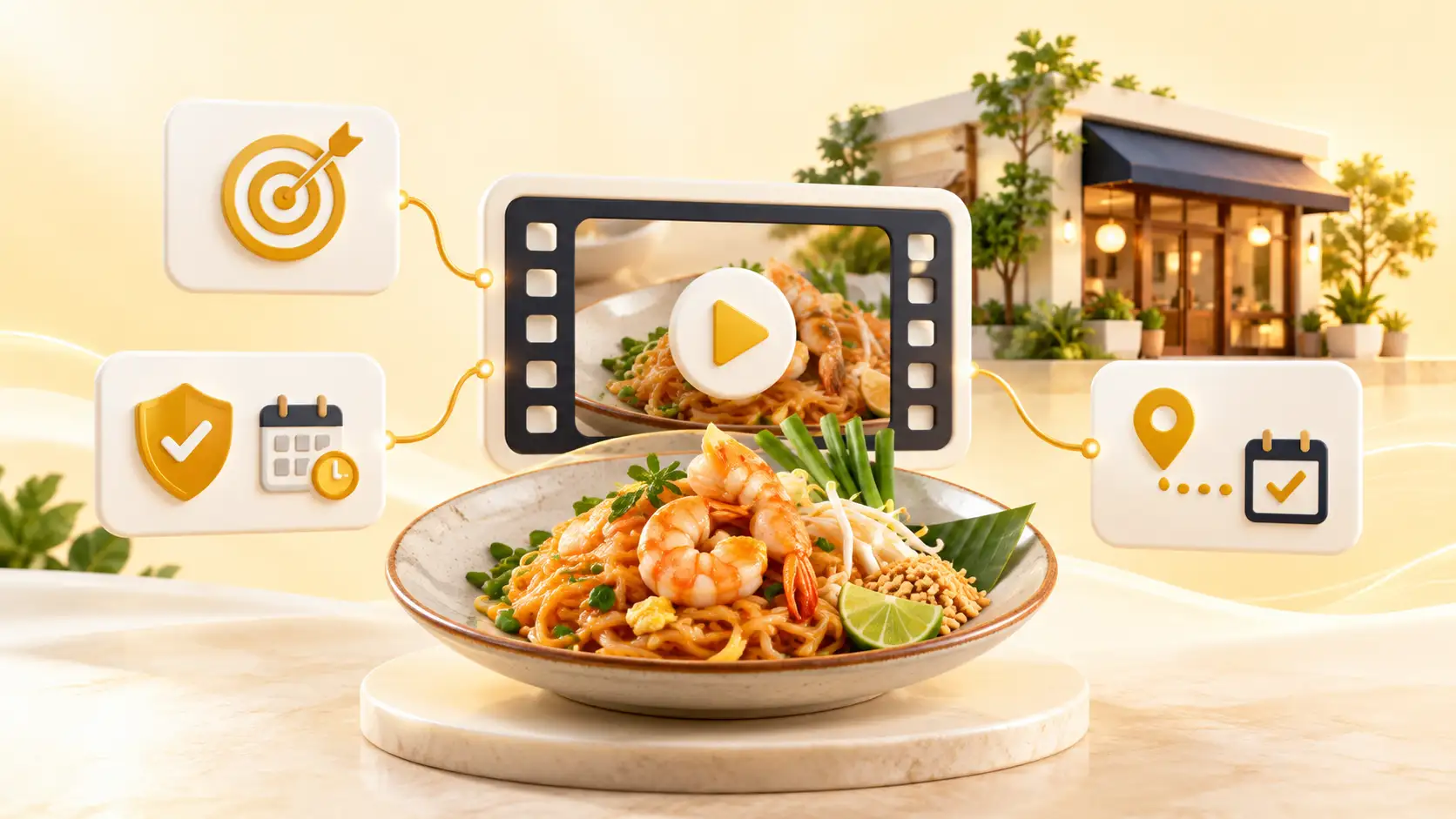
Decide what the campaign is trying to change. “Promote the restaurant” is too broad to guide a short sequence, a call to action, or an evaluation of the result.
A new lunch menu, a branch opening, a private-dining inquiry, and a takeaway offer require different information. Choose one task for the first campaign, then define the audience, location, dates, and desired action.
The action should match the business process. If staff must confirm a table, the ad should invite a reservation request rather than imply instant confirmation. If an offer applies only to one branch, make that scope clear in the destination and the creative.
Collect the real dish photographs, approved menu details, offer conditions, opening hours, and booking route. Ask the kitchen and branch manager to confirm what is current. Give every changing fact an owner and an expiry date.
A generated scene can look convincing while displaying the wrong ingredients or serving size. Record what must stay unchanged so reviewers can compare the finished frames against a reliable reference, rather than judging only whether they look appetising.
A restaurant ad is a representation of an experience people may purchase. Use verified photographs or footage for the food, venue layout, and details that influence expectations.
Use an approved image of the actual dish as a reference. If animation changes the garnish, portion, sauce, or presentation, reject or correct the result. Attractive movement is not a reason to approve an inaccurate item.
Small, controlled movements may be easier to review than complex transformations. A gentle push toward a real dish can communicate its appearance, while an elaborate generated preparation scene may introduce ingredients or techniques the kitchen does not use.
A short recording of plating, a beverage pour, or the entrance may provide better evidence than a synthetic recreation. AI can still support planning, editing, or versioning around that footage.
Do not ask generation to manufacture proof that the restaurant is busy, popular, or recommended. A room full of invented diners is not evidence of demand. If an illustrative scene is used, its context must not imply it is a record of the venue’s actual service.
Suncorp’s AI video production services provide a starting conversation about supplied assets, filming needs, and generated elements. Confirm the production scope and approval checkpoints before deciding what the final campaign will contain.
Use a simple structure: show the relevant food or occasion, explain the specific reason to consider it, and give a clear next step. Decorative scenes should not delay the information the audience needs.
A hypothetical script could show an approved dish image, describe its verified characteristics, identify the branch, and direct viewers to the current menu. Use placeholders until staff approve the details. Do not describe it as a bestseller unless the business has genuine evidence for that statement.
This concept is appropriate when the viewer needs to understand what is being offered. A montage of unrelated dishes can make the decision harder if the campaign is actually about one new item.
Start with the meal or occasion, then state the approved offer and its important conditions. Show the relevant date, branch, and action in the edit, using readable text added outside generation.
Urgency must have a real basis. Do not invent limited stock or a deadline to make the script more persuasive. The landing page should repeat the same conditions and remove or update the promotion when it ends.
A private-dining campaign might explain the inquiry process, show the actual space, and ask organisers to send their date and group requirements. Avoid promising a capacity, package, or facility that operations have not confirmed.
Suncorp’s AI content writing guide for Thai SMEs supports the underlying discipline of writing from specific, approved information. This advertising guide adds shot-level truth checks and campaign evaluation rather than repeating a general drafting process.
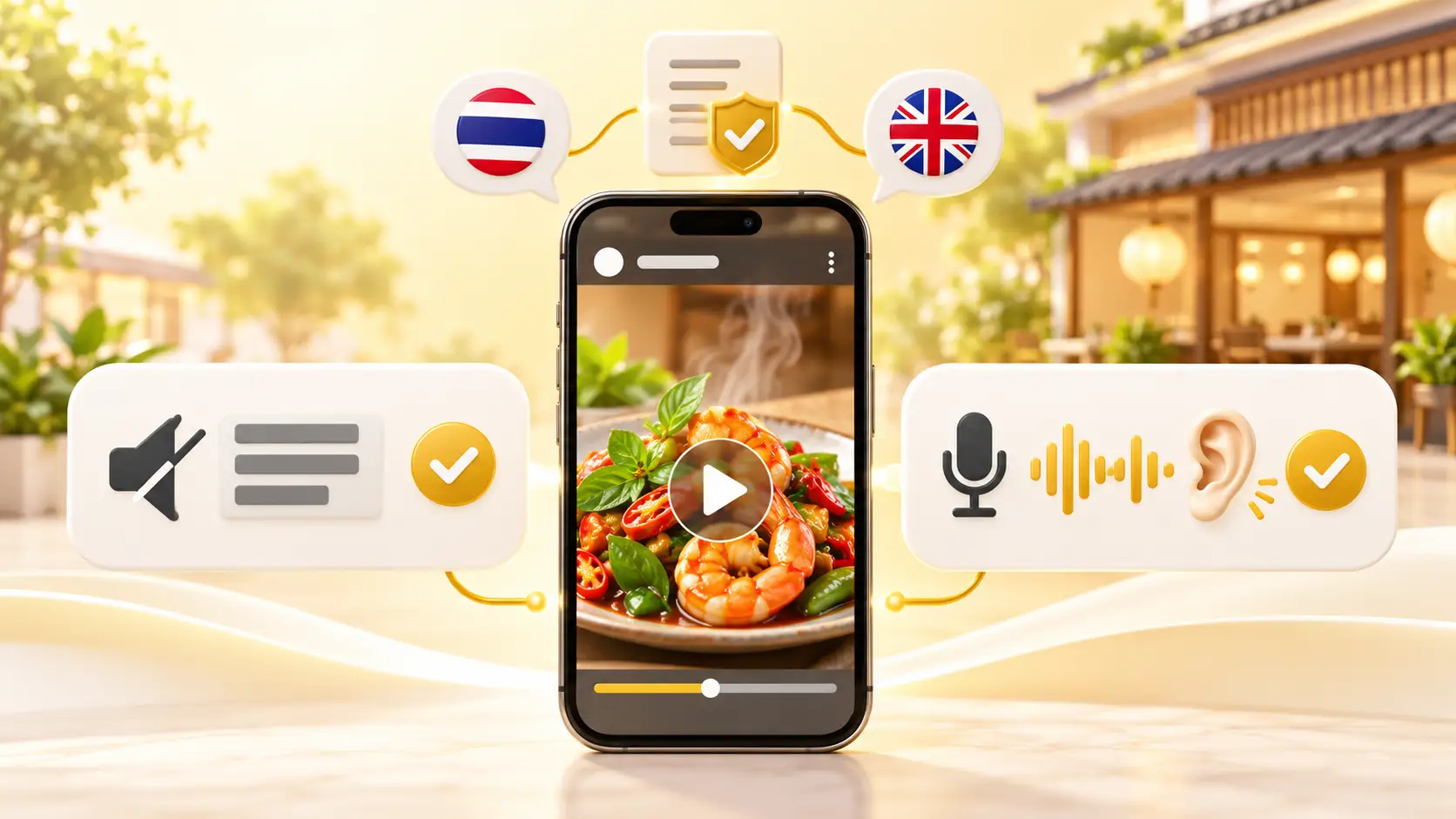
Prepare Thai and English versions from the same approved fact sheet when both audiences are relevant. Have a native reviewer check tone, pronunciation, dish names, locations, and the booking instruction.
Check whether the core message is understandable with sound off. Captions, offer text, and the destination should carry the decision without relying entirely on voiceover. This is a usability check, not a claim that every audience always watches silently.
Text should fit the screen at realistic viewing size. Preview the export on a phone and check that interface elements do not cover essential details. Add labels in editing rather than asking a generation model to render a menu or price accurately.
Listen for unnatural pronunciation and changes to meaning. A voice that sounds fluent can still name a dish incorrectly or imply that an inquiry is a confirmed booking. Check the audio against the script and offer sheet.
Suncorp’s AI content services are relevant when a campaign needs scripts and destination copy in multiple languages. Agree who supplies the factual inputs and who signs off each version.
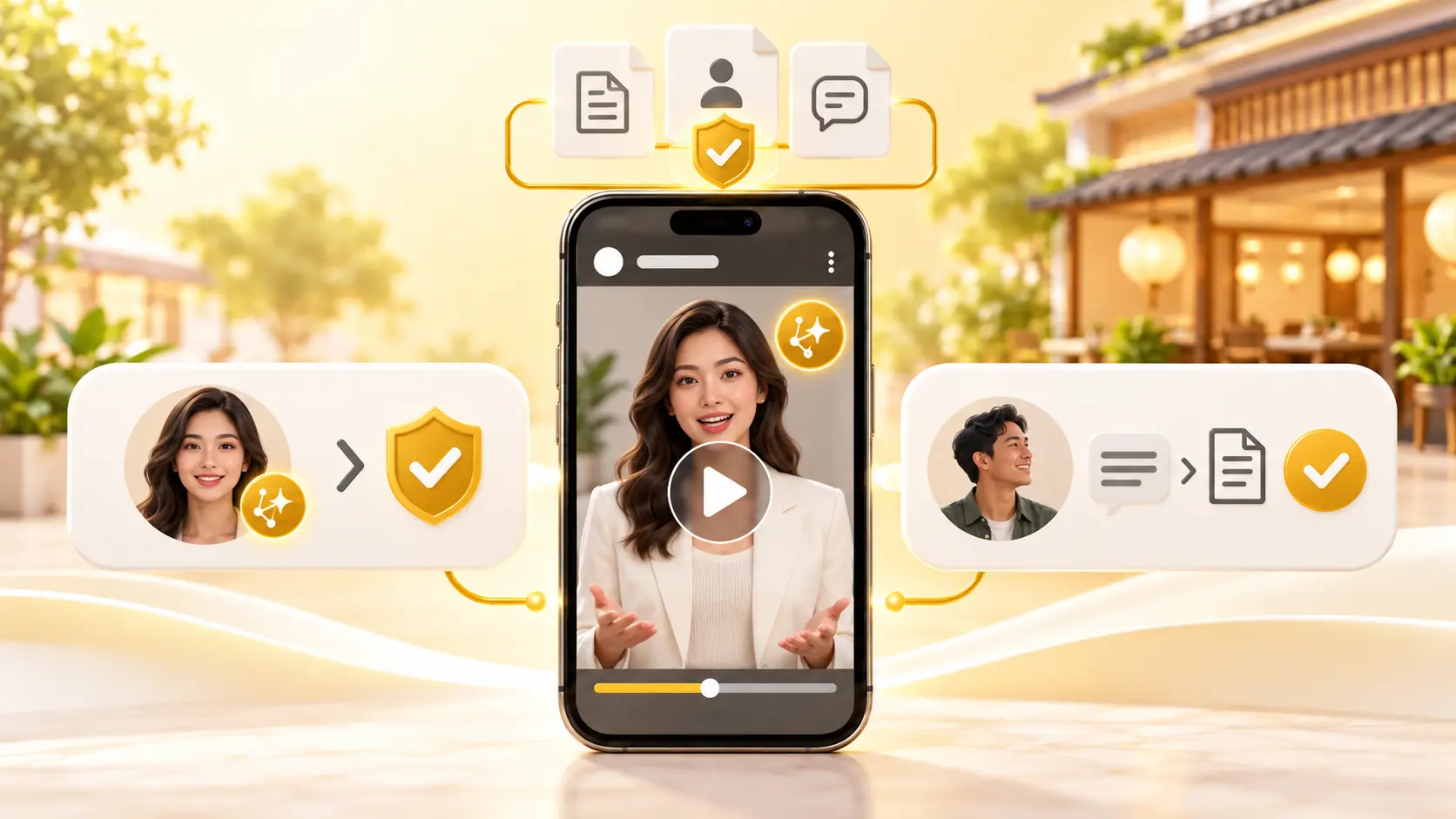
A synthetic presenter can communicate an approved message, but it should not masquerade as a real customer giving personal feedback. Do not write “I ate here” for an invented person or simulate an endorsement from someone who did not give it.
Use genuine testimonials only with an accurate source and permission for the intended use. The business should retain the original statement and approval rather than treating a rewritten or generated testimonial as interchangeable with real evidence.
As a cross-market example, the US Federal Trade Commission’s rule on fake reviews and testimonials addresses fabricated experiences, including AI-generated material. This reference is not a statement that US rules define every obligation for a Thai campaign; obtain appropriate local advice when needed.
Retain the approved script, identity permissions, and the original testimonial separately from the final edit. This creates a practical audit trail if someone later asks who made a statement or how a scene was produced.
Platform disclosure also needs attention. YouTube’s synthetic-content guidance explains when realistic generated or meaningfully altered content needs disclosure there. Review each platform’s current requirements for the actual creative rather than copying a label from another channel.
Producing many versions is only useful when the team knows what difference it is investigating. Write the hypothesis before generating the variation.
For example, compare a dish-focused opening with an occasion-focused opening while keeping the same offer, audience, and destination. That can help the team interpret the observed difference. Changing the dish, offer, editing, audience, and booking page together makes the result harder to explain.
Maintain a version register containing the script, assets, approval, export, campaign dates, and hypothesis. Mark rejected clips clearly so a later editor does not accidentally use an unapproved scene.
The broader production process is separate from this campaign decision. A campaign should use a stable production brief, not reinvent the brand style for every variation. Start with a small number the team can review properly before increasing output.
The ad and destination should make the same promise. A lunch offer should link to the relevant menu or booking information, with current conditions and a usable action. Do not send interested people to a page that hides the details behind unrelated navigation.
Check mobile loading, branch selection, form behaviour, contact links, and the confirmation message. Test the actual user journey with the business team before release. An ad can attract the right person while a broken or confusing destination loses the inquiry.
If the restaurant also wants visibility when diners research it in search, Suncorp’s GEO vs SEO guide provides the wider context. Paid creative, website information, and search discovery are related parts of the journey, but an advertising clip is not a guarantee of AI recommendations.
Keep a process for stopping outdated creative. A campaign whose offer has ended should not remain active because the file still looks good. Assign an owner to dates and menu availability, with a clear handoff when operational facts change.

Define the primary action and its meaning. A form submission, reservation request, confirmed table, fulfilled delivery order, and repeat customer are different outcomes. Report them separately when the business can track them.
Define the primary action and its meaning. A form submission, reservation request, confirmed table, fulfilled delivery order, and repeat customer are different outcomes. Report them separately when the business can track them.
Agree how staff record inquiry sources, duplicates, cancellations, and fulfilled bookings. If a LINE conversation cannot be reliably connected to a campaign, state the limitation rather than assigning all inquiries to the video.
Use tracking consistently across the variants you compare. Changes in how an event is counted can make one version appear better even when the underlying customer behaviour has not improved.
Views, watch time, and clicks can help explain the journey, but none automatically represents revenue. If attention rises while useful inquiries remain weak, inspect the offer, audience, and destination before producing more versions.
Record the audience conditions, time period, and production effort with the result. A small sample or a seasonal difference should not become a universal claim that AI video outperforms filming. Treat observations as evidence for the next decision.
Suncorp’s AI visibility platform comparison discusses a separate measurement problem: visibility in AI answers. Use it when reviewing search tools, while keeping advertising conversions and AI-answer observations in different reports.
The same production discipline can support a car rental campaign: verified assets, one action, approved conditions, language review, and meaningful measurement. The underlying purchase decision requires different evidence.
Use the real vehicle or verified model assets, with accurate interiors and features. Do not generate an upgraded cabin or imply a model is available when the fleet team has not confirmed it. State whether photographs are illustrative when they do not show the offered vehicle.
Pickup location, booking confirmation, inclusions, eligibility, and other conditions should come from the rental operator. Do not copy a restaurant’s immediate-visit message into a service where availability and approval must be checked first.
A rental ad may need a quote request with dates and requirements rather than an instant purchase claim. Its success should be evaluated against useful inquiries and confirmed rentals, not the restaurant’s reservation metrics.
This section is a transfer checklist, not a claim that Suncorp operates a fleet or provides a particular rental offer. Keep the restaurant campaign and any rental campaign separate in their scripts, destination, approvals, and reporting.
AI video ads for restaurants can help teams develop and adapt creative, provided the food, venue, offer, and customer claims remain true. Build from approved assets, test a meaningful variation, and connect the result to an action operations can verify.
A disciplined process also makes it easier to reuse learning across campaigns without reusing inaccurate scenes or expired offers. The goal is a useful advertising asset and a better next decision, not the largest number of generated clips.
Discuss a restaurant visibility review with Suncorp using your website, branch list, menu sources, and booking process as the starting evidence.
They can be used for clearly conceptual work, but should not misrepresent the dish being sold. For an actual menu promotion, use verified assets and check that generation has not changed ingredients, portion, or presentation.
No. A presenter can communicate approved information, while a testimonial represents someone’s real experience. Do not give an invented person a fabricated dining history or imply an endorsement that was never provided.
Choose a manageable set that can be reviewed and compared against a specific hypothesis. The right number depends on production capacity and the evidence needed; more clips are not automatically more informative.
The production process can transfer, but the scripts, facts, booking conditions, and measures must change. A vehicle inquiry is a different task from choosing dinner, and the offered vehicle must be represented accurately.
No. Costs and results depend on the offer, audience, distribution, destination, and complete production effort. Compare business outcomes under documented conditions rather than assuming generation alone improves performance.

Suncorp AI Growth Solutions is a Bangkok-based agency building AI Search Optimization (GEO/AEO), AI Advertising, and AI Content services specifically for the Thai and Southeast Asian market — the video production and multi-language work this guide describes runs through the same AI Video practice we operate for real estate and hospitality clients directly.
Get a free, scored AI Visibility report in about two minutes
— no commitment required.
October 30, 2026
October 16, 2026

