

A practical, technical walkthrough of how to get cited by ChatGPT, Gemini, and Google AI Overviews — schema, content structure, and the checks that actually move the needle.

Suncorp AI Search Optimization
AI Growth Solutions, Bangkok
A traveler planning a week in Phuket doesn’t open ten tabs anymore. They open ChatGPT or Gemini, type “best beachfront hotel in Phuket for a family with young kids, mid-range budget,” and get three names back in one paragraph — sometimes with a short reason for each, sometimes with nothing more than the name and a booking nudge. If your hotel isn’t one of the three, you didn’t lose a click. You lost the booking, and you probably never knew the traveler existed.
That’s the specific, high-stakes version of AI search hotels are facing right now. Hospitality is one of the most AI-search-exposed industries in Thailand — trip planning was already moving toward conversational tools before generative AI arrived, and “where should I stay” is a more natural fit for a chat interface than almost any other purchase decision. This guide covers AEO for hotels specifically: how AI travel planners actually decide which properties to recommend, how they weigh your own website against your OTA listings, what structured data hospitality businesses need that generic AEO advice never mentions, and a practical checklist for Thai hotel owners and revenue managers who want to be one of the names in that paragraph.
Suncorp AI Growth Solutions built its AI Search Optimization practice around exactly this kind of industry-specific gap — and this piece draws on that work plus, through the same company group, direct hospitality-industry experience via a sibling hotel revenue-management practice, not generic AEO advice with “hotel” dropped into the examples.

AEO for hotels is the practice of structuring a property’s website, listings, and public information so AI assistants — ChatGPT, Gemini, Perplexity, Google’s AI Overviews — can confidently and accurately recommend it when a traveler asks a question your hotel could genuinely answer. “Confidently” matters because a model won’t recommend a property it can’t verify basic facts about, and “accurately” matters because a wrong answer — an outdated price, a closed restaurant, a pool under renovation — is worse for the model’s credibility than no answer at all. Given the choice, it usually just leaves you out.
This builds directly on the mechanics covered in our guide to GEO vs SEO: the same training-time authority, live retrieval, and cross-source synthesis that decide any AI citation apply here too. What’s different for hotels is the query itself. SEO gets your property found when someone searches “hotels in Phuket” and scrolls a results page. AEO gets it mentioned when someone asks a specific, decision-stage question and expects a direct answer, not a list to research further — and “family-friendly,” “walking distance to the night market,” “good for a late check-in” are exactly the qualifiers a traveler would ask a knowledgeable local friend, in precisely the register generative AI answers in.
Hotel queries split into a few distinct patterns, and each rewards different content. The broad recommendation ask — “best hotel in Chiang Mai for a couple’s anniversary, under 4,000 baht a night” — is the highest-stakes type: the model selects a short list from hundreds of properties using imperfect information, so specific, verifiable positioning (“boutique, 12 rooms, rooftop pool, 5-minute walk to the Old City moat”) gives it something concrete to match. A page that just says “luxury experience” gives it nothing.
The verification ask — “is [hotel name] good for solo female travelers,” “does [hotel name] have an airport shuttle” — means the traveler already has your name and is asking AI to confirm a decision, which is where review-aggregation behavior matters most. The comparison ask — “[Hotel A] vs [Hotel B] for a Krabi beach holiday” — draws on everything a model can find across your site, your OTA listings, and any third-party coverage; a hotel with thin, generic content loses these by default, even against a genuinely weaker property that simply describes itself better. All three show up constantly in Thailand’s inbound tourism market, where a large share of travelers are planning from outside the country and reach for an AI assistant instead of researching from scratch.
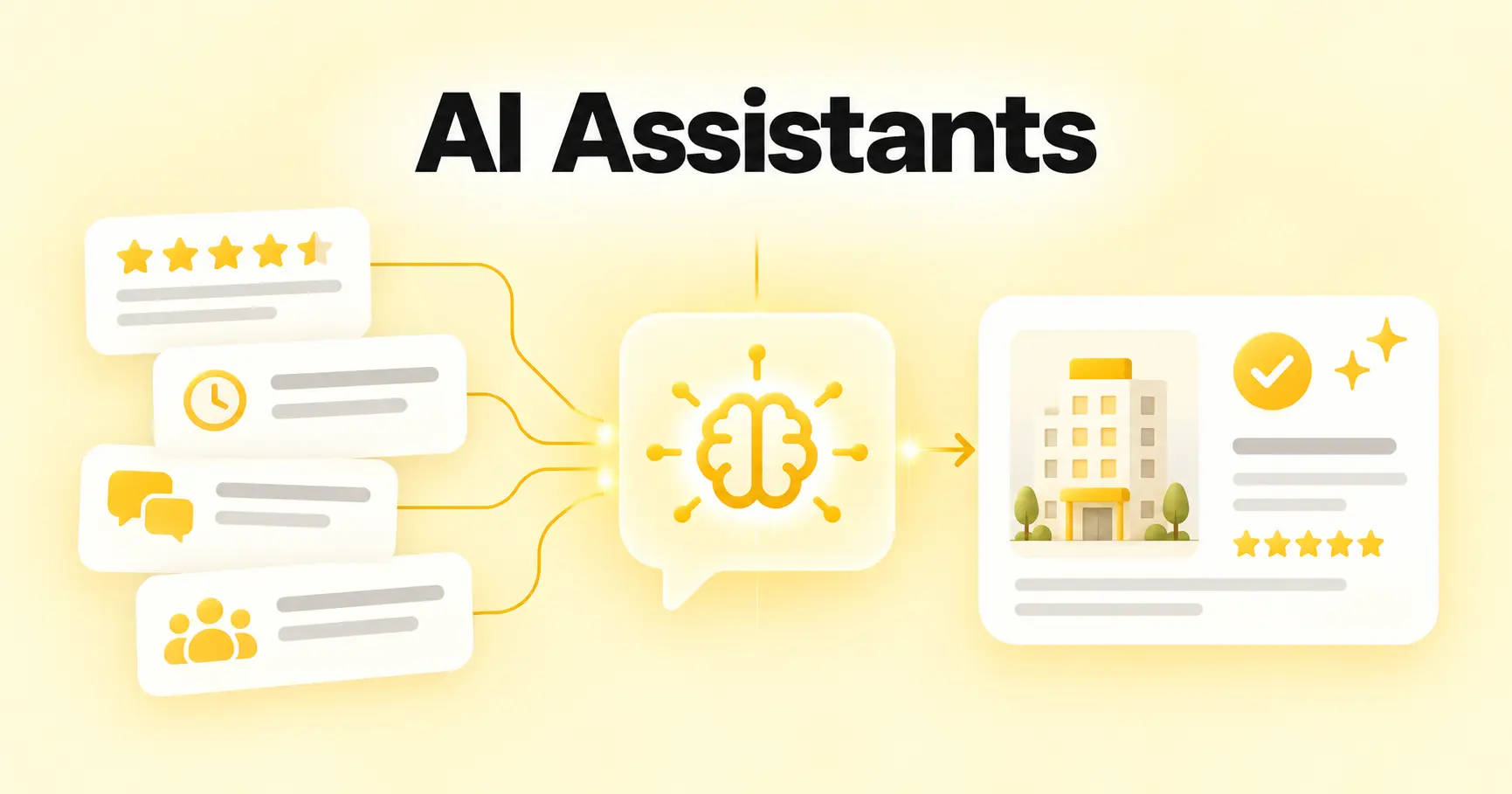
When a model has live retrieval available, hotel review data is some of the most reliably retrievable content that exists — TripAdvisor, Google reviews, Booking.com, and Agoda all publish structured, frequently updated review data at scale, which makes hospitality a category where an AI assistant is more likely than average to check current sentiment rather than lean on stale training-time impressions. Three things about that data carry more weight than businesses expect: volume (40 recent reviews reads as more trustworthy than 4, regardless of average score), recency (a rating built mostly on three-year-old stays is weaker signal than a slightly lower one built on last month’s), and specific, repeated sentiment — “noisy street-facing rooms,” “excellent breakfast,” “helpful with late check-in” — which is what makes a synthesized answer sound informed rather than generic.
The GEO vs SEO fundamentals this piece builds on cover why models often synthesize an answer across several sources rather than quoting one — see Suncorp’s GEO practice for the full mechanics. For a hotel specifically, that means your own website’s polished description doesn’t get the final word: it gets averaged against your Booking.com listing, your Google Business Profile, and whatever a Thai travel blog said two years ago. A beautifully written homepage can’t outweigh a complaint repeated across three OTA platforms — which is the biggest reason hotel AEO can’t be a website-only project.
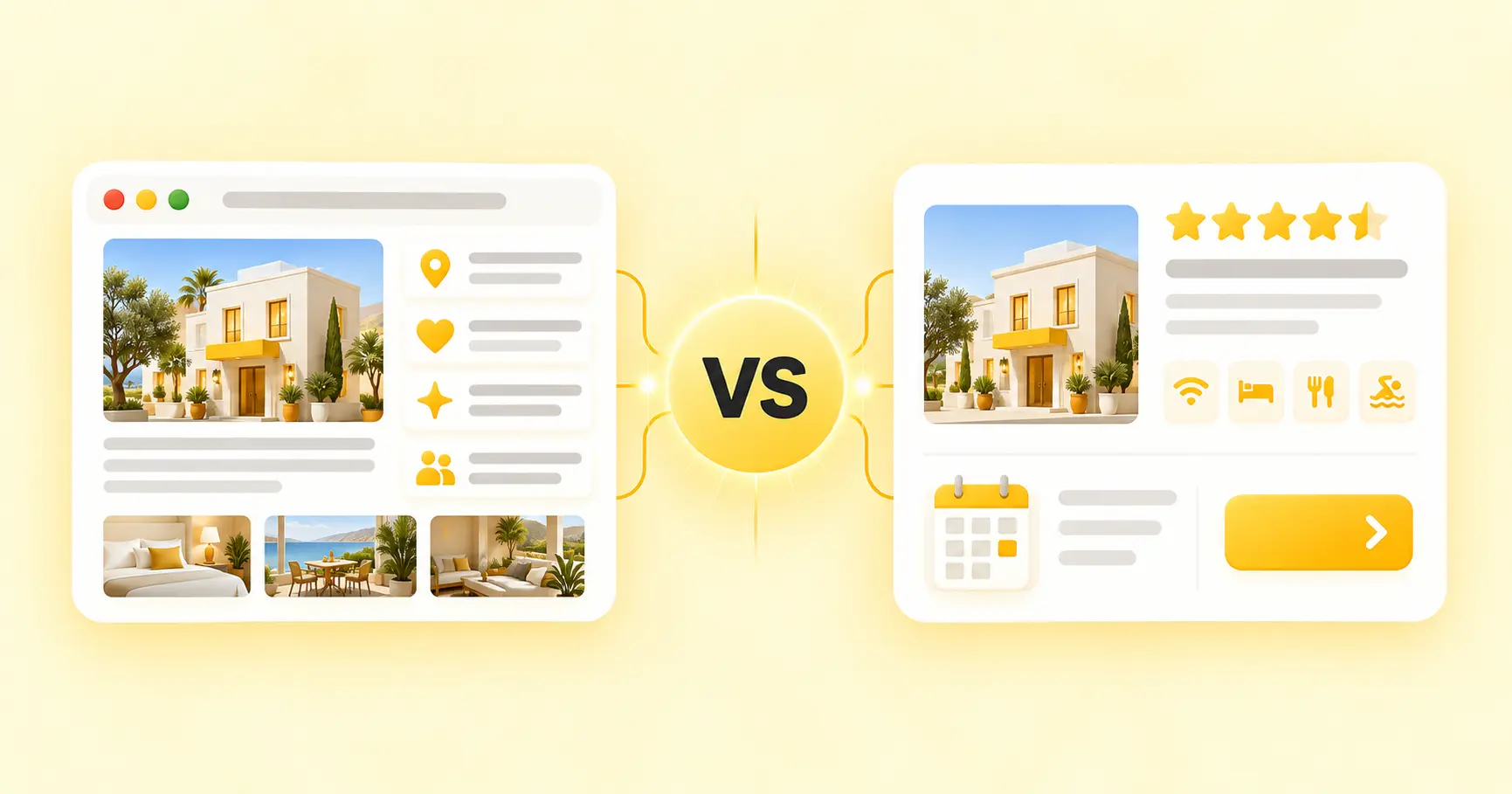
Hotels often assume that because most bookings originate on Agoda or Booking.com, AI assistants default to citing those platforms over the hotel’s own site. In practice it’s more specific, and the difference matters for where you spend effort. OTA listings tend to win on structured facts — exact pricing, real-time availability, amenity checklists, aggregated review scores — exactly the clean, tabular, frequently-updated data a model finds easy to retrieve and trust. For a fact-based query (“what’s the average nightly rate at [hotel]”), an OTA listing is often the more reliable source and gets the citation.
Your own website tends to win on nuance — the specific detail that makes a property the right fit for a specific traveler rarely survives an OTA’s standardized template, and that differentiating detail is exactly what a model needs to answer the qualifier-heavy queries above. It only exists if your own site actually states it, rather than assuming a photo gallery communicates it. The practical conclusion: keep OTA listings complete and consistent — same name, address format, and amenity list everywhere, since inconsistency reads as unreliable data to a model cross-checking sources — and treat your own site as the place where the specific, human reasons to choose you over a near-identical competitor actually get written down, because nowhere else will do it for you.

Generic AEO advice usually stops at “add schema markup” without saying which schema. For hotels, the relevant type is LodgingBusiness, a subtype built specifically for accommodation businesses, and it answers exactly the questions travelers ask:
Schema doesn’t replace good writing — it tells a model what a page is about, it doesn’t make thin content sound expert. But for a category this fact-heavy, structured data closes a gap prose alone leaves open, with a clear technical checklist rather than a judgment call. LodgingBusiness is the hospitality-specific version of a broader technical foundation — see how to rank in ChatGPT and Google AI Overviews for the same schema-and-structure discipline applied generally, across any industry.
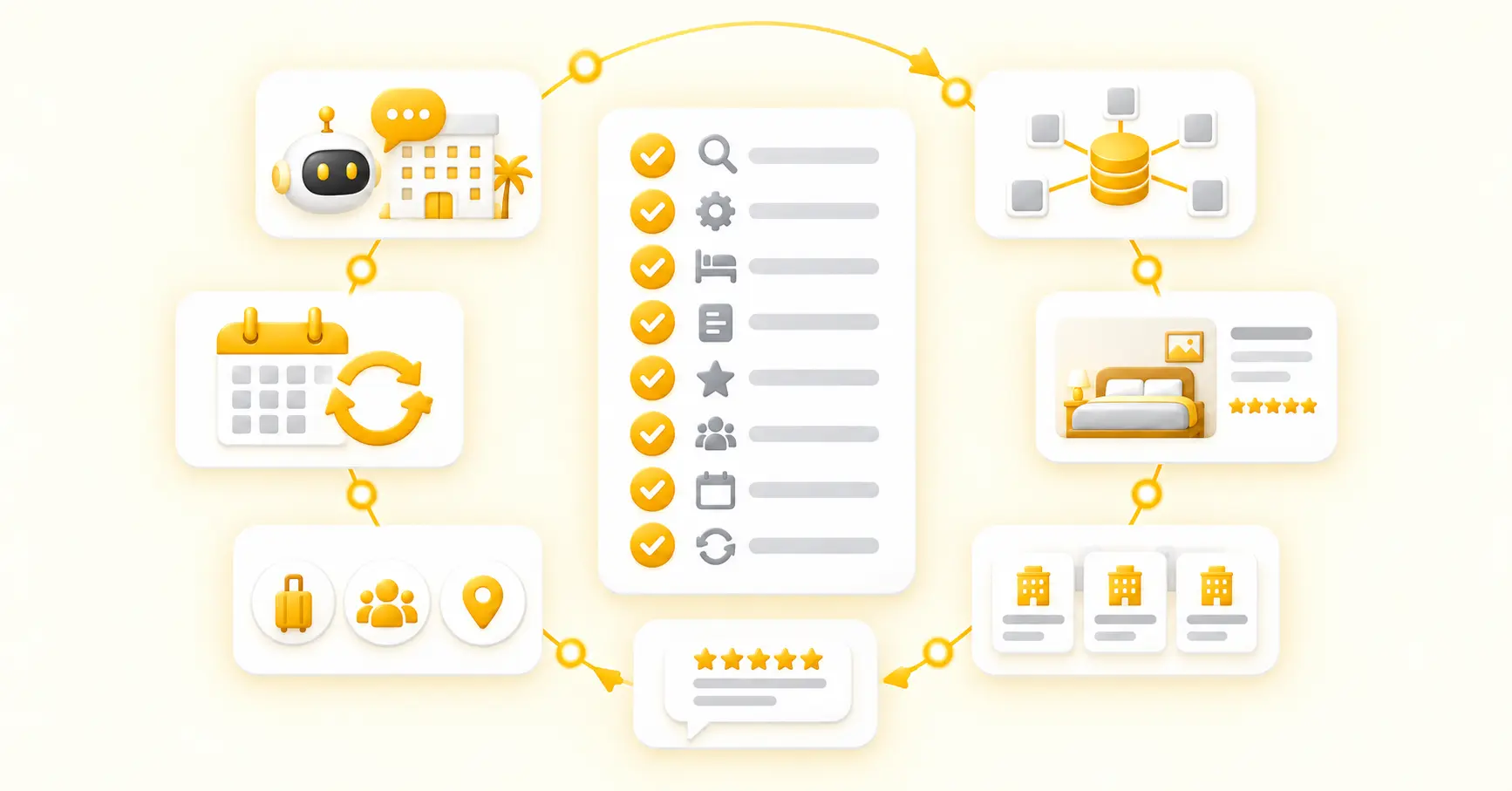
Suncorp’s own AEO practice is built around running exactly this checklist for Thai businesses, hospitality included, rather than a one-off audit that goes stale within a quarter.
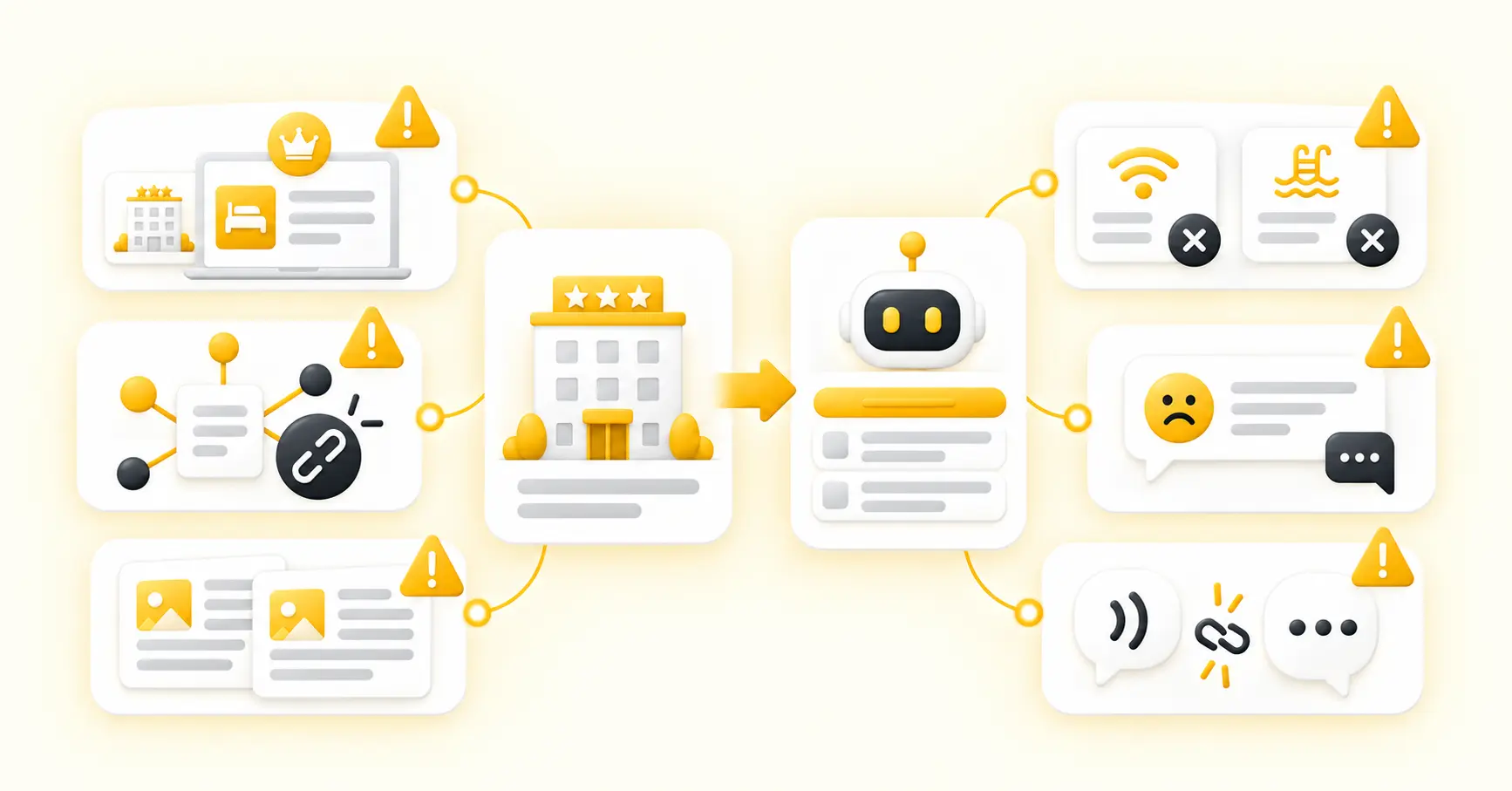
Treating OTA presence as the whole strategy. Being listed on Agoda and Booking.com is necessary, not sufficient — it hands the fact-based part of AEO to a third party while leaving the differentiating, narrative part of your visibility unaddressed.
Publishing no structured data, or inconsistent data across platforms. A missing LodgingBusiness schema is a missed opportunity; conflicting amenity lists or pricing across your site, Google, and OTAs actively undermines every source at once.
Ignoring negative reviews instead of responding to them. Sentiment synthesis picks up on how a property handles criticism, not just whether criticism exists — an unanswered pattern reads worse than a professionally handled one, to guests and models alike.
Using the same generic, templated description everywhere. If your website, OTA blurb, and Google Business Profile all read like the same paragraph, there’s no differentiating detail anywhere for a model to draw on when a traveler asks what actually makes your property different.
Assuming English-language AI visibility covers the Thai-speaking domestic market, or the reverse. Domestic and inbound travelers often ask AI assistants in different languages with different priorities — a hotel visible in English AI answers can be functionally invisible to Thai-language queries about the same destination.
This checklist is the same one Suncorp’s AI Search Optimization practice runs for hotel clients directly — schema implementation, listing-consistency audits, and the ongoing room-type and FAQ copy that Suncorp’s AI Content Studio produces to keep a property’s own site as current as its OTA listings. For properties already running paid promotion, the same team’s AI Advertising work keeps campaign messaging consistent with whatever an AI assistant is currently telling travelers about the property, rather than letting the two channels drift apart.
AEO for hotels isn’t hotel marketing with “AI” added to the name — it’s a genuinely new layer of visibility that decides whether a traveler ever sees your property before they’ve already booked somewhere else. The mechanics are specific to this industry in ways generic AEO advice rarely covers: unusually retrievable review data, a real split between what your own site should own versus what OTA listings already handle well, and structured data that closes gaps prose alone can’t.
That specificity is also why this guide draws on Suncorp’s sibling hotel revenue-management practice rather than treating hospitality as a generic AEO example — the same company group operates in this industry day to day, not just writes about it. Thai hotels that treat AI visibility as an ongoing discipline, not a one-time update, put themselves in the paragraph AI assistants hand travelers — instead of hoping the traveler scrolls far enough to find them the old way.
Hotel SEO gets your property found in a list of search results a traveler scrolls through. AEO for hotels gets your property mentioned directly inside an AI assistant’s answer to a specific, decision-stage question — a family-friendly recommendation, a comparison between two properties, a verification of a specific amenity. The two overlap heavily on fundamentals but optimize for a different moment in the traveler’s decision.
Yes, when they have enough verifiable information to do so confidently. Tools with live web access will often name specific properties and summarize why, especially for well-documented destinations like Phuket, Bangkok, or Chiang Mai. Properties with thin or hard-to-verify information are more likely to be described generically or left out entirely, even if they’re genuinely a strong fit.
Not strictly, but OTA listings are among the most reliable sources of the structured, frequently updated facts AI assistants lean on for fact-based queries. A hotel with no OTA presence makes the model work harder to verify basic details, which usually works against being recommended.
LodgingBusiness schema is the relevant type — it covers price range, star rating, amenities, address, contact details, check-in/check-out times, and review data in a machine-readable format built specifically for accommodation businesses, rather than the generic business schema most sites default to.
Structural fixes — schema, clearer content, consistent listings — can influence live-retrieval-based answers within weeks. Training-time visibility, being part of the pattern a model has learned to associate with your destination and category, builds more slowly, over months, the same way broader search authority always has.
Often better than in traditional SEO: AI assistants answering qualifier-heavy queries (“boutique,” “family-run,” “walking distance to X”) are looking for exactly the specific, differentiated detail independent properties tend to have more of than a templated chain listing — provided that detail is actually written down somewhere a model can find it.
It depends on existing technical capacity and how many properties are involved — a single well-resourced property can often manage the content and listing-consistency work in-house once schema is set up correctly. Multi-property groups, or hotels without in-house technical resources, typically move faster with a partner who understands both the AEO mechanics and the hospitality-specific detail covered throughout this guide. If you want a straightforward answer for your property, book a free AI visibility consultation and we’ll tell you honestly where you stand.

Suncorp AI Growth Solutions is a Bangkok-based agency building AI Search Optimization (GEO/AEO), AI Advertising, and AI Content services specifically for the Thai and Southeast Asian market — the localization gap this guide covers is the one we built our practice around.
Get a free, scored AI Visibility report in about two minutes
— no commitment required.
September 18, 2026
September 11, 2026

