
Does ChatGPT answer in Thai or English? Explore how ChatGPT handles Thai queries, why English responses can happen, and what it means for your brand’s AI visibility.

Suncorp AI Search Optimization
AI Growth Solutions, Bangkok
A Bangkok shopper types a question into ChatGPT entirely in Thai — “ร้านไหนดีที่สุดสำหรับ…” — and gets an answer back that’s part Thai, part English, or sometimes fully in English, brand names and all. Nobody told the model to switch languages. It just did. If you’ve noticed this and assumed it was a fluke, or worse, never noticed it at all because you only ever test your brand’s AI visibility in English, this is the gap this guide closes.
Whether ChatGPT actually answers in Thai — the plain question this guide answers first — and what happens to your brand’s visibility when it doesn’t, is a question almost none of the general GEO advice circulating online even acknowledges, because most of it is written for English-only markets where the question never comes up. This guide covers what’s actually happening when a Thai-language query gets an English-leaning answer, why it happens, how it differs across ChatGPT, Gemini, and Google’s AI Overviews, and what a Thai business should actually do about it — not just how to notice it.
Suncorp AI Growth Solutions built its AI Search Optimization practice specifically around gaps like this one — the parts of AI visibility that only show up once you test in Thai, not just translate an English checklist. This piece draws directly on that work.
Mostly yes, technically — ChatGPT and other major AI assistants are genuinely multilingual and will attempt to detect and match the language of a Thai-language query. But “attempts to match” and “reliably does” aren’t the same claim, and the gap between them is exactly where a Thai brand’s AI visibility can quietly leak away. In practice, three things commonly happen instead of a clean, fully-Thai answer: the model answers mostly in Thai but names brands, products, or sources in English because that’s the language the underlying source material used; the model mixes Thai sentence structure with English terminology mid-answer, especially for technical or brand-specific topics; or, less often but not rarely, the model answers a Thai question almost entirely in English, particularly when the query is short, ambiguous, or closely resembles an English-language pattern the model has seen far more often.
None of this is a bug being hidden from users — it’s a visible, testable behavior any business can check today, and the rest of this guide explains why it happens and what it means for whether your brand ever gets mentioned in the answer at all.
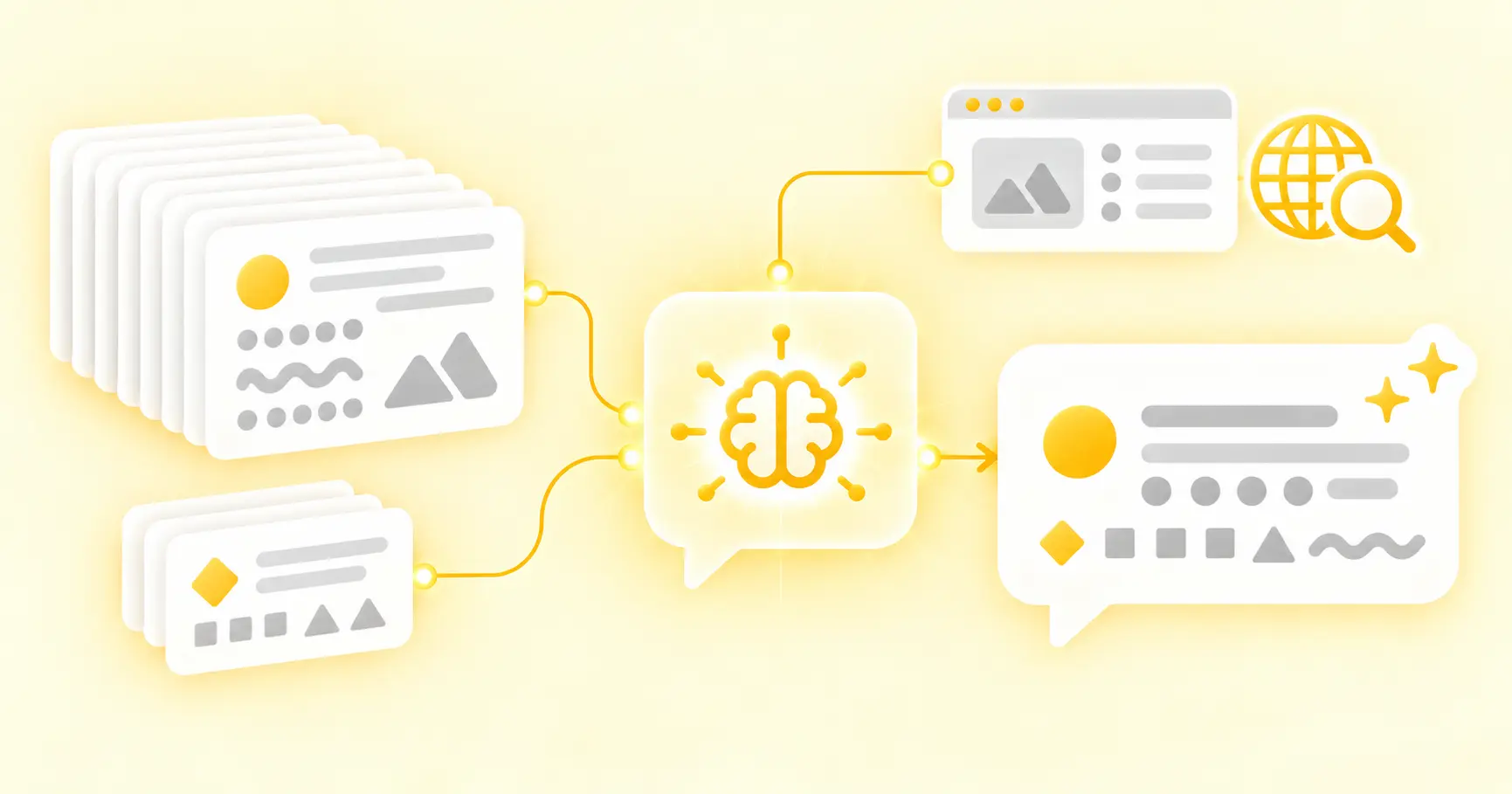
Large language models learn language patterns from the text they’re trained on, and that training data is overwhelmingly English — the same imbalance covered in our guide to GEO vs SEO, where it explains why English-language sources dominate AI answers even about Thai topics. That imbalance doesn’t just affect which sources get cited; it affects the language the model reaches for by default, a pattern researchers and practitioners sometimes call language leakage — where a model asked a question in one language pulls vocabulary, phrasing, or entire clauses from the language its strongest matching source content was written in.
Two mechanisms make this concrete. First, training-time bias: a model has seen vastly more English text about most topics — including topics about Thailand itself — so its most confident, fluent phrasing is often in English, even when it correctly understands the Thai question. Second, live retrieval, covered in the same guide above: when a model fetches current web content to build its answer (retrieval-augmented generation), and the best-matching, most authoritative source for that query happens to be in English, the model has to translate that source’s information into Thai on the fly — and translation quality, brand-name handling, and terminology consistency all vary during that step, sometimes surfacing the original English terms unchanged.
There’s a third, more mundane cause worth naming because it’s the easiest for a business to test and fix on its own side: mixed-language input. Thai users frequently type queries that already blend Thai and English — brand names, product categories, and technical terms often stay in English even in an otherwise fully Thai sentence, which is a completely normal pattern in Thai digital communication. A model matching that mixed input naturally tends to answer in a similarly mixed register, which isn’t really “failing” to answer in Thai so much as mirroring how the question itself was actually asked.
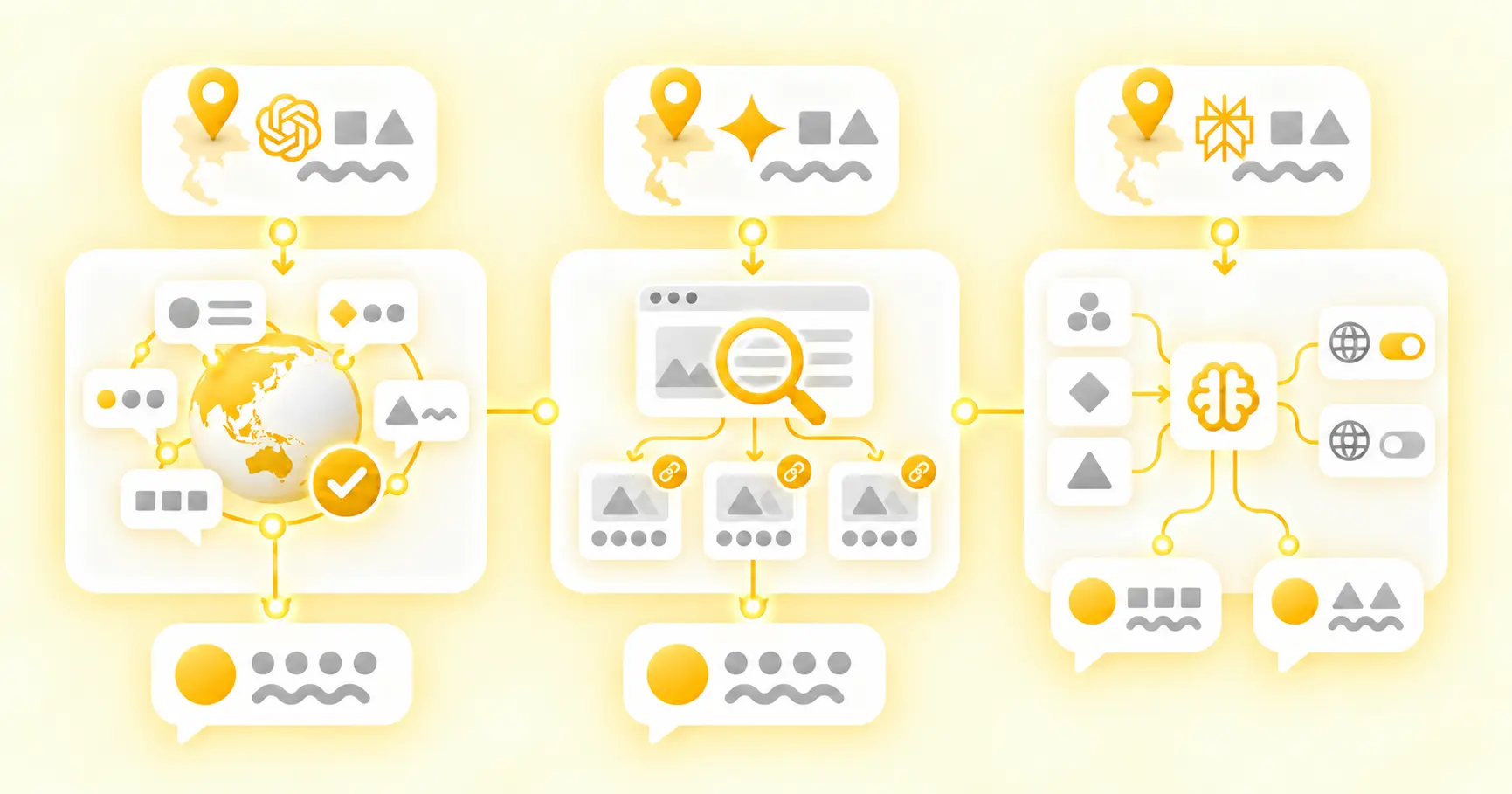
The behavior isn’t identical across platforms, and treating “AI search” as one monolithic thing is one of the most common mistakes in this space. Google’s AI Overviews and Gemini are built on models trained with heavier investment in multilingual and regional data than most competitors, given Google’s decades of localized Search operations in Thailand — in practice this tends to mean somewhat more consistent Thai-language responses for broad, well-covered topics, though brand-specific and niche B2B queries still show the same English-leaning pattern described above. Perplexity, built around live retrieval and visible citations, tends to answer in the query’s language but will often surface English-language source titles and snippets directly in its citation list even when the narrative answer is in Thai — which matters because a citation is itself a visibility event, language notwithstanding. ChatGPT’s behavior varies more by which underlying model version is active and whether it has live web access enabled for that query, which means the same question asked twice, on two different days or two different ChatGPT tiers, can genuinely produce different language behavior.
The practical takeaway isn’t that one platform is “better” at Thai — it’s that AI visibility measurement now has a language dimension most businesses haven’t been checking, on top of the platform and query-type dimensions covered in the GEO vs SEO fundamentals above.

Whether ChatGPT answers in Thai isn’t just a curiosity about how chatbots talk — it changes whether and how your brand shows up. Three consequences follow directly from the mechanics above.
If your brand is known mainly through English-language content, an English-leaning answer to a Thai question can actually work in your favor — the model reaching for English source material is more likely to reach for yours, if yours is the English content it already trusts on the topic. This is a genuine, if slightly uncomfortable, silver lining for Thai businesses that have already invested in English-language content and international-facing SEO.
If your brand is known mainly through Thai-language content, the same mechanic works against you when the model defaults to English — your Thai-language authority simply doesn’t get pulled into an English-leaning answer, even for a Thai user asking a Thai question about a Thailand-specific topic. This is the scenario the GEO vs SEO guide already flags as an opportunity gap; this piece is the sharper, language-specific version of that same gap.
Inconsistent brand-name handling across languages actively hurts citation quality. If your brand name, product names, or key terminology are transliterated inconsistently across your own Thai-language content — one spelling on your website, another on social media, another in press coverage — a model translating an English source into Thai, or matching Thai input against your content, has a harder time confidently connecting the mentions into one consistent entity. Consistency here isn’t a nice-to-have; it’s the same kind of structural signal that schema markup and consistent NAP data are for local SEO.
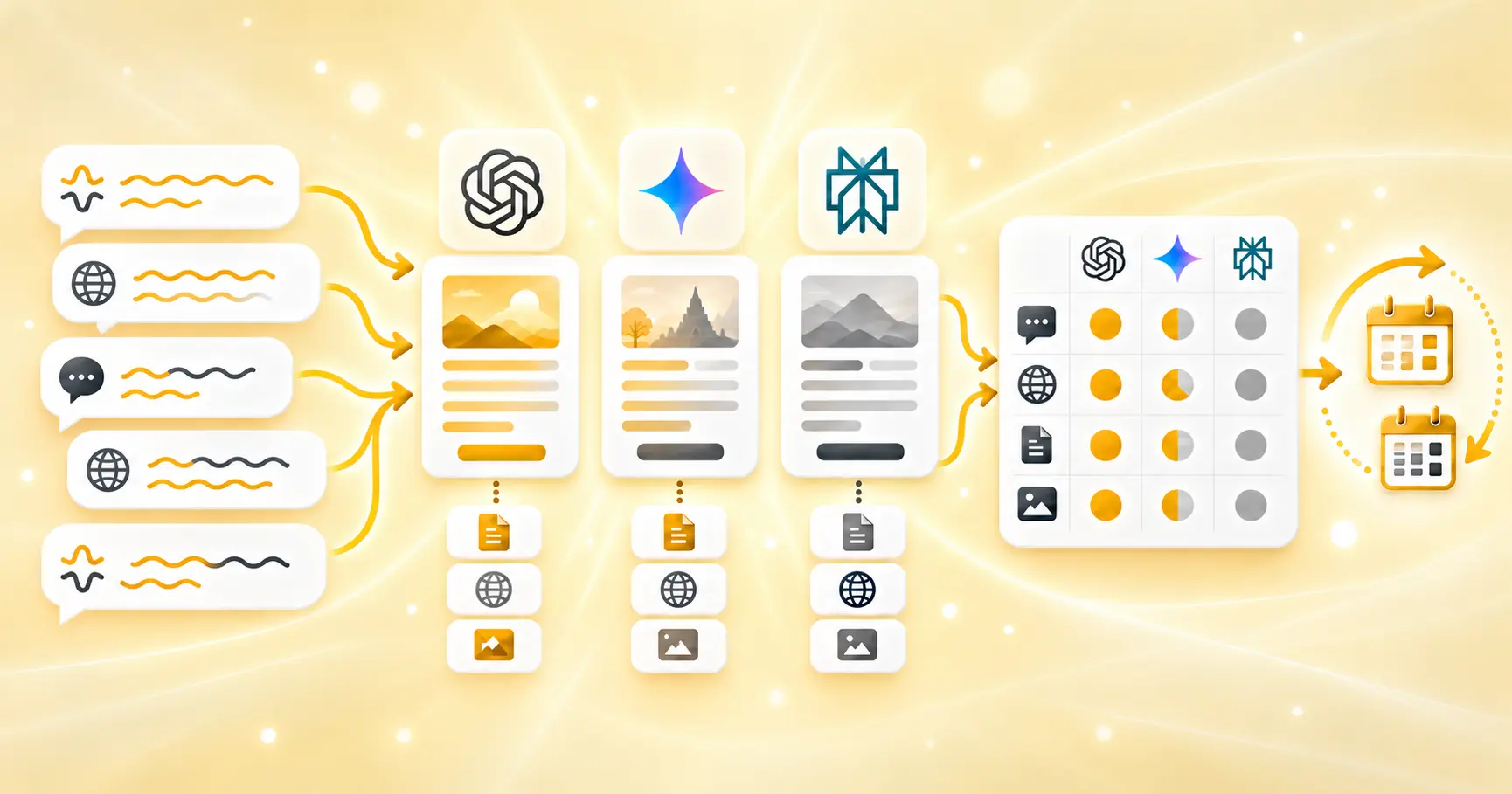
Because the answer to “does ChatGPT answer in Thai” shifts by platform, model version, and query phrasing, it doesn’t have one fixed, permanent answer — the only reliable way to know your brand’s current situation is to check it directly, the same way the GEO vs SEO fundamentals recommend for AI visibility generally, manually or with one of the AI visibility platforms compared for the Thai market if you’d rather automate the recurring check.
Publish genuinely Thai-language content, not translated English content. A direct translation carries over English sentence rhythm and often English terminology choices that read as machine-translated to both Thai readers and, indirectly, to a model weighing how naturally your content matches a Thai query.
Keep brand and product naming consistent across every Thai-language surface — website, social channels, directory listings, press mentions — so a model has one clear, repeated entity to match, not several loosely related name variants.
Add explicit Thai-language structure and schema, including Organization and Article schema with inLanguage set correctly, so a model parsing your page has an unambiguous signal about which language your content is actually in, rather than inferring it.
Don’t abandon English-language content to chase this — as the section above showed, English-language authority still shapes English-leaning answers to Thai questions, so the goal is genuine bilingual coverage, not a Thai-only pivot that gives up the ground already covered under Suncorp’s GEO practice.
Only ever testing AI visibility in English. A brand that looks strong in ChatGPT’s English answers can be functionally invisible in the Thai-language version of the same question — the two need to be checked separately, not assumed to track together.
Treating a translated English page as equivalent to a Thai-language page. Models pick up on the register and phrasing patterns of genuinely native Thai content differently than on a direct translation, even when the factual content is identical.
Inconsistent brand-name transliteration across channels. A name spelled three different ways across a website, Facebook page, and press mentions splits what should be one strong entity signal into three weak ones.
Assuming this behavior is fixed and won’t change. Model providers update retrieval systems and underlying models continuously; a test run today is a snapshot, not a permanent verdict — see the AEO for hotels guide for the same “recheck on a schedule” discipline applied to another industry.
Giving up on Thai-language content because “AI just answers in English anyway.” As this guide shows, that’s a pattern with real, identifiable causes — not an unfixable limitation — and it’s exactly the kind of gap a business that addresses it deliberately can turn into an advantage over competitors who haven’t noticed it yet.
Suncorp’s AI Content Studio is built specifically for the “publish genuinely Thai-language content, not translated English content” recommendation above — native Thai copy written for a Thai reader first, not an English draft run through translation. The same discipline extends to paid channels: Suncorp’s AI Advertising work keeps Thai and English campaign messaging consistent with each other, so a brand’s paid presence doesn’t undercut the bilingual authority this guide recommends building organically.

Does ChatGPT answer in Thai? Often, yes — but “often” is doing real work in that sentence, and the gap between often and always is exactly where a Thai brand’s visibility either gets built deliberately or lost by default. Training data imbalance, live-retrieval source language, and simple mixed-language input all push AI answers toward English in ways that have nothing to do with whether a Thai business is actually the better answer. Testing this directly, in Thai, with your customers’ real questions, is the only way to know where you currently stand — and building genuinely Thai-language, consistently-named content on purpose is how a business turns this from a risk into the same first-mover opening the rest of Suncorp’s GEO work is built around.
Usually, yes — ChatGPT detects and attempts to match the query’s language. But the answer can still lean English in brand names, technical terms, or entire response segments, depending on the language of the source material the model draws from and which underlying model version is active. This is the pattern this guide calls “ChatGPT Thai language AI search” behavior, and it’s inconsistent enough that it needs direct testing rather than assumption.
Most often because the strongest, most authoritative source material the model has learned from or retrieved for that specific topic is in English — a pattern called language leakage. It’s a function of what content exists and how much authority it carries, not a fixed rule about the platform.
For broad, well-covered topics, often somewhat more consistently, given Google’s longer investment in localized Search for Thailand. For niche, brand-specific, or B2B queries, the same English-leaning pattern shows up across all major platforms — the difference narrows considerably outside general-knowledge topics.
Ask ChatGPT, Gemini, and Perplexity your customers’ actual questions in Thai, note the response language and whatever sources get cited, and repeat with a mixed Thai-English phrasing since that’s how many Thai users actually type. Repeat the check every few weeks, since model behavior changes on a schedule no business controls.
Structural fixes — schema, clearer content, consistent listings — can influence live-retrieval-based answers within weeks. Training-time visibility, being part of the pattern a model has learned to associate with your destination and category, builds more slowly, over months, the same way broader search authority always has.
No — English-language authority still shapes English-leaning answers to Thai questions, so the strongest position is genuine content in both languages, not a Thai-only pivot that gives up ground already built in English. The goal is deliberate bilingual coverage, not a replacement strategy.
Standardize the Thai transliteration of your brand and product names across your website, social channels, directory listings, and any press mentions you control. It costs nothing but attention, and it’s one of the few purely structural fixes in this guide with a clear, checkable outcome. For a fuller technical walkthrough of getting cited by AI search generally, see how to rank in ChatGPT and Google AI Overviews.
A team already comfortable testing prompts across platforms and auditing content structure can often run the process in this guide on its own. A business without that spare capacity, or one that wants its Thai-language AI visibility benchmarked against real competitors rather than guessed at, typically moves faster with a partner who already tracks this for a living. If you want a straightforward read on where your brand currently stands, book a free AI visibility consultation and we’ll tell you honestly.

Suncorp AI Growth Solutions is a Bangkok-based agency building AI Search Optimization (GEO/AEO), AI Advertising, and AI Content services specifically for the Thai and Southeast Asian market — the localization gap this guide covers is the one we built our practice around.
Get a free, scored AI Visibility report in about two minutes
— no commitment required.
September 18, 2026
September 11, 2026

